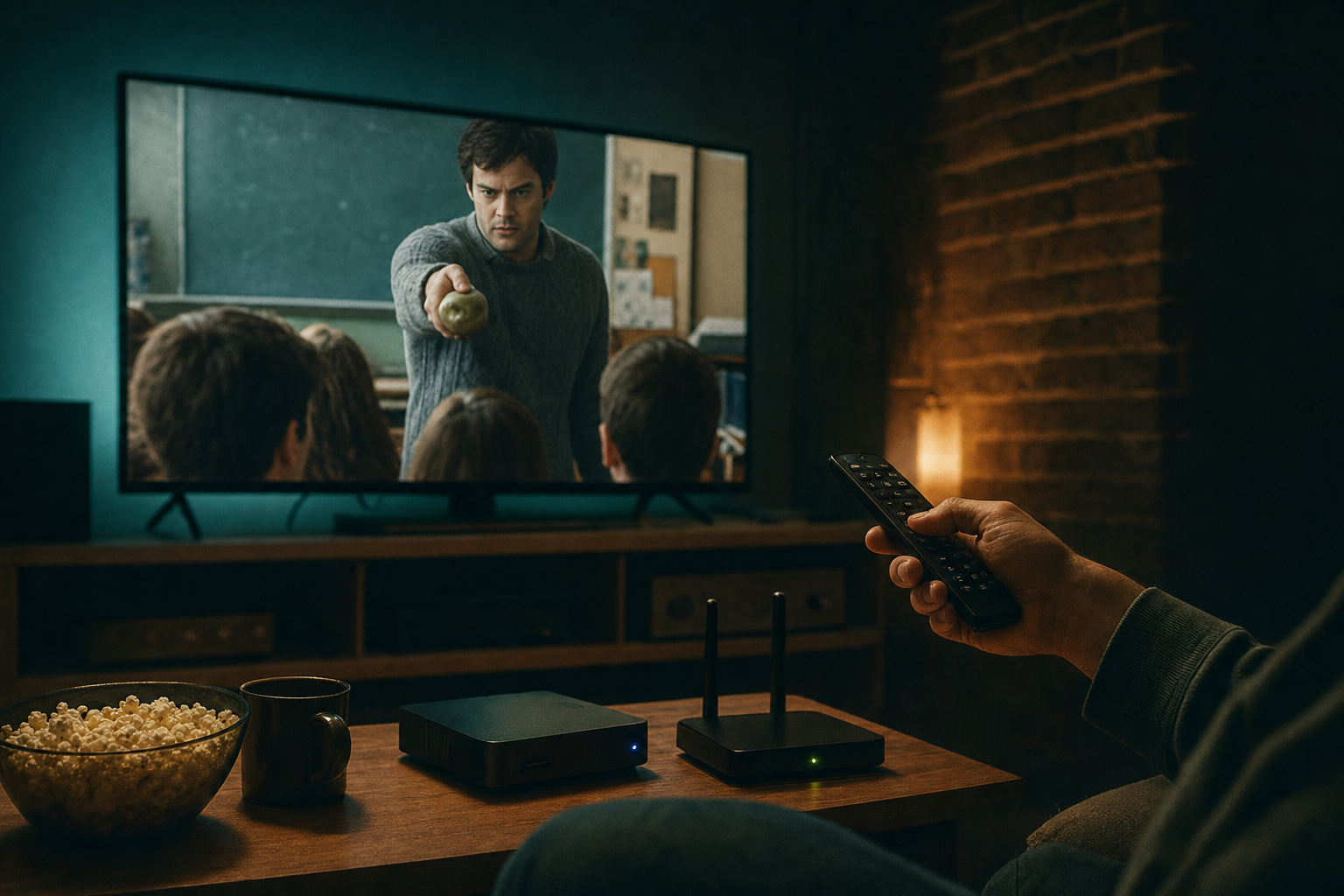
You search for ap bio streaming because you want one simple answer: where can I watch A.P. Bio tonight without wasting half an hour bouncing between apps, search engines, expired links, and suspicious mirrors.
That should be simple. In practice, it is not. Streaming rights move, regional catalogs differ, subscriptions expire, and search results often mix legitimate services with pages that are unsafe, misleading, or plainly unauthorized.
Teams think the problem is finding a stream. The real problem is building a repeatable media workflow that tells you what is legal, what is available in your region, what device will actually play it, and what fallback makes sense if the show moves.
That changes the conversation. AP Bio streaming is not only about one sitcom. It is a useful test case for how cord cutters, IPTV viewers, torrent users, and home media hobbyists should handle any show where rights, devices, privacy, and convenience collide.
Table of contents
- AP Bio streaming is a workflow problem, not a link hunt
- Build a clean AP Bio streaming decision path
- Where to check legitimate AP Bio availability in 2026
- Device and app architecture that makes streaming reliable
- Search, watchlists, and metadata prevent duplicate work
- IPTV, torrents, and home media in an AP Bio streaming workflow
- Privacy, safety, and account hygiene
- What breaks when AP Bio streaming is implemented badly
- A practical workflow for AP Bio streaming nights
- How bittorrented.com fits a legal media workflow
- Final checklist for AP Bio streaming in 2026
AP Bio streaming is a workflow problem, not a link hunt
Why availability changes
A.P. Bio has moved through different distribution windows over time, and the important lesson is not which service happens to show it on a given day. The useful lesson is that streaming catalogs are stateful systems. Rights expire. Apps relabel seasons. Bundles change. A show may be included in one region, purchase-only in another, and unavailable in a third.
The mistake teams make is treating a search result as the source of truth. Search is a snapshot. Streaming access is a contract between a rights holder, platform, region, account, device, and time.
Practical rule: never treat a random page saying watch now as proof that the stream is legal, current, or safe.
For AP Bio streaming, the practical question is: can you verify availability through a legitimate provider that your device supports, under an account you control, in the region where you are watching?
What you actually control
You do not control licensing. You do control your workflow.
That means keeping a short list of trusted services, knowing whether you prefer subscription or purchase, maintaining a watchlist, and having a fallback that does not involve risky sites. If you run a home media setup, it also means knowing what content you have the rights to store, how it is named, and which devices can play it.
A useful way to think about it is state management. The show has an availability state. Your account has an entitlement state. Your device has a playback state. Your household has a support state. If any one of those is wrong, movie night becomes debugging night.
The legal boundary matters
Torrent and IPTV users often know the technical side better than the average streaming viewer. They understand peers, playlists, codecs, buffers, clients, and dashboards. But technical capability does not create distribution rights.
For copyrighted TV episodes, use licensed streaming services, digital stores, library access, or your own lawfully obtained media. Torrents can be useful for public-domain media, Linux ISOs, open video projects, and lawful personal workflows. IPTV can be useful for legal live channels and authorized playlists. Neither should be treated as a shortcut around licensing.
Related reading from our network: software teams face a similar trust-boundary problem when signing and distributing apps, and this Apple Developer Program workflow is a useful adjacent example of why access, trust, and distribution need architecture instead of vibes.
Build a clean AP Bio streaming decision path
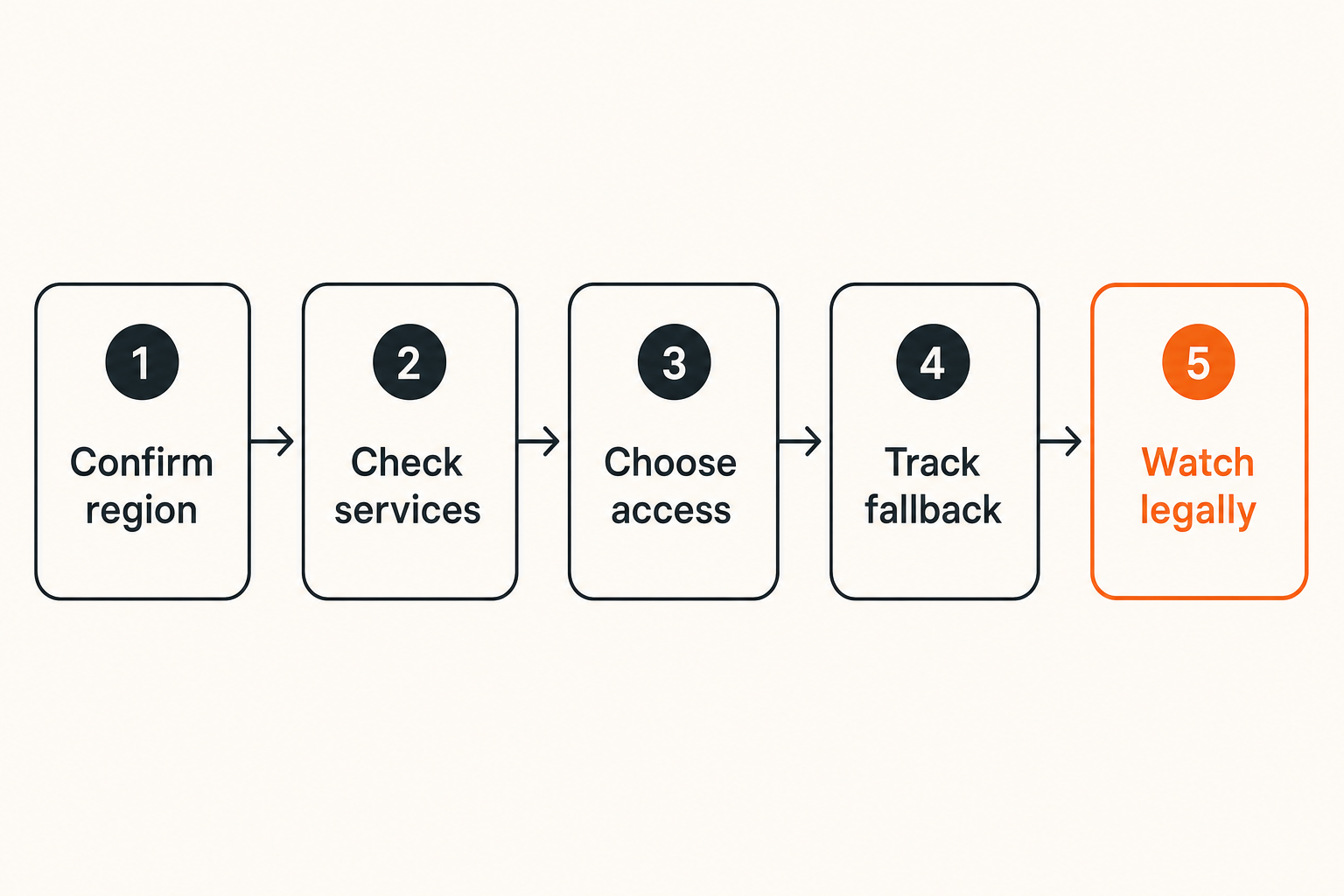
Start with region and account state
Before you open ten tabs, write down three facts:
- Your region.
- The services you already pay for.
- The devices you actually use to watch.
This sounds basic. It removes most false positives. A result that works in another country is not useful if your account cannot play it. A service that supports phones but not your TV is not useful for the living room. A bundle you canceled last month is not useful just because the icon is still on your device.
The practical question is not where does AP Bio exist somewhere on the internet. It is where can this household legally play AP Bio tonight with the least operational friction.
Choose the right access model
Most viewers have four realistic access models:
| Access model | Best when | What to verify | Common failure |
|---|---|---|---|
| Subscription streaming | You already pay for the service | Region, season coverage, device support | Show leaves catalog mid-watch |
| Digital purchase | You rewatch often | HD/4K status, account portability | Store lock-in or missing extras |
| Digital rental | You only need a few episodes | Rental window and playback device | Timer starts before you are ready |
| Library or TV bundle | You have eligible access | App login, availability, ads | Provider authentication breaks |
None of these is universally best. Subscription is convenient until the catalog changes. Purchase is stable until the store or device ecosystem becomes annoying. Rentals are cheap for one-off viewing but bad for slow watching. Library and bundle access can be excellent, but sign-in flows often fail at the worst time.
Practical rule: choose the access model based on how you watch, not based on which button appears first in search.
Keep torrents and IPTV in legal lanes
For AP Bio streaming specifically, assume legitimate streaming, rental, purchase, or authorized access is the correct path. Do not use torrents or IPTV playlists to obtain unauthorized copies of copyrighted episodes.
That does not mean torrent and IPTV tooling are irrelevant. Many home media people use the same dashboards, players, metadata habits, and network troubleshooting techniques across legal media sources. The boundary is rights. If you own lawful media or use open content, your home stack can be powerful. If the content is not authorized, the workflow is broken no matter how clean the UI looks.
Where to check legitimate AP Bio availability in 2026
Subscription catalogs
Start with official app search inside the services you already use. Then confirm with the service website if the app result looks stale. Apps cache aggressively. Smart TV search layers can also show titles that are not included anymore or require another channel subscription.
For AP Bio streaming in 2026, avoid assuming that an old article, old Reddit comment, or old search snippet is current. Rights windows age quickly. The stronger workflow is to check the primary catalog, verify the season list, and open one episode page before promising anyone that the show is available.
A small habit helps: keep a note with the date you verified availability. If you watch over several weeks, re-check before the next session.
Digital rental and purchase
Digital stores are often the cleanest fallback when subscription access disappears. The tradeoff is account lock-in. If you buy through one ecosystem, make sure your preferred TV, streaming stick, or game console can play that store reliably.
Check whether the listing includes all seasons, whether episodes are sold individually, and whether captions are present. If you care about extras or versions, verify before buying. Many digital purchases are straightforward, but not all listings are equally complete.
Related reading from our network: the same verify-before-checkout habit shows up in commerce workflows, where this Wayfair coupon workflow is a good reminder that the displayed offer is not the final truth until exclusions, totals, and conditions are checked.
Library, cable, and bundle access
Some viewers still have cable credentials, live TV bundles, campus access, or library-linked streaming services. These can be legitimate options, but they add an authentication dependency.
What breaks in practice is not the video file. It is the identity chain. The TV app sends you to a browser. The browser asks for a provider. The provider wants a password reset. The household member who owns the login is asleep.
If you use bundle access, test it before viewing night. Open the app, sign in, start a trailer or episode, and confirm your device is authorized.
Device and app architecture that makes streaming reliable
Map the playback path
The UI is not the whole system. A typical AP Bio streaming path might look like this:
- Search layer on TV or phone.
- Streaming provider app.
- Account entitlement check.
- DRM handshake.
- CDN video delivery.
- Local Wi-Fi playback.
- TV audio and subtitle rendering.
If playback fails, the app may blame the network, the network may be fine, and the real issue may be entitlement or DRM. This is why restarting the router sometimes helps and sometimes does nothing.
If you run dashboards for home media, the same principle applies. Status events matter. Our earlier guide to SSE streaming for home media and IPTV dashboards covers why live status updates are useful when you are monitoring clients, playlists, and playback state instead of guessing from a frozen screen.
Plan for DRM and sign-in friction
Legitimate streaming services use DRM and device authorization. That is normal. It also means old devices can fall out of support.
Before you decide where to buy or watch, verify the provider supports your actual hardware. A phone app is not enough if the household wants the living room TV. Browser playback is not enough if you rely on casting and casting fails with that provider.
A practical device matrix can be simple:
- Living room TV: primary playback.
- Streaming stick: fallback playback.
- Phone: search and account management.
- Laptop: emergency playback and HDMI fallback.
- Tablet: secondary household playback.
The mistake teams make is optimizing for the device they are holding during search, not the device where the show will be watched.
Watch the network, not just the app
For half-hour comedy, bandwidth requirements are usually manageable, but reliability still matters. Weak Wi-Fi, overloaded mesh nodes, captive DNS filters, and aggressive ad-blocking can all cause weird playback failures.
Do not start with exotic fixes. Start with boring checks:
- Does another title play in the same app?
- Does the same episode play on another device?
- Does the device have current time and firmware?
- Does your DNS or filtering tool block provider domains?
- Does playback work on wired Ethernet or closer Wi-Fi?
Practical rule: isolate app, account, device, and network one at a time. Changing five things at once only creates new unknowns.
Search, watchlists, and metadata prevent duplicate work
Use unified search carefully
Unified search tools are useful, but they are not perfect. TV operating systems, media apps, and third-party guides often combine subscription, rental, purchase, and promotional results. That can make AP Bio streaming look available when the actual result is a paid episode, a channel add-on, or a dead listing.
Use unified search as a routing layer, not an authority layer. Once it points to a provider, verify inside that provider.
For broader discovery across media sources, a search surface such as BitTorrented search can help you think in terms of finding and organizing media, but the same rule applies: confirm rights, source, and playback path before treating any result as watch-ready.
Track episodes and seasons
A.P. Bio has multiple seasons, and streaming platforms sometimes display them unevenly. Your workflow should track what you watched, where you watched it, and whether the next episode is available under the same access model.
The low-tech version is a note. The higher-tech version is a watchlist app or home media manager. The important part is not the tool. It is avoiding repeated searches for the same question.
Minimum fields worth tracking:
- Show name.
- Season and episode.
- Provider or store.
- Verification date.
- Access type.
- Playback device used.
- Notes about captions, ads, or quality.
Normalize names in your home library
If you maintain a legal home library, naming matters. Media servers rely on predictable titles, season folders, episode numbers, and metadata matches. Sloppy names cause duplicate entries, missing artwork, wrong episode descriptions, and failed watch-state sync.
Use consistent patterns such as:
- A.P. Bio/Season 01/A.P. Bio - S01E01 - Episode Title.ext
- A.P. Bio/Season 02/A.P. Bio - S02E03 - Episode Title.ext
Do not over-engineer it. The goal is that your media server, backup system, and household can all understand the structure without a private legend.
Related reading from our network: technical content teams deal with similar normalization problems when they want machines to parse and reuse information, and this optimization SciPy AEO workflow is a useful adjacent read on structure, labels, and retrieval.
IPTV, torrents, and home media in an AP Bio streaming workflow
IPTV is not a show archive
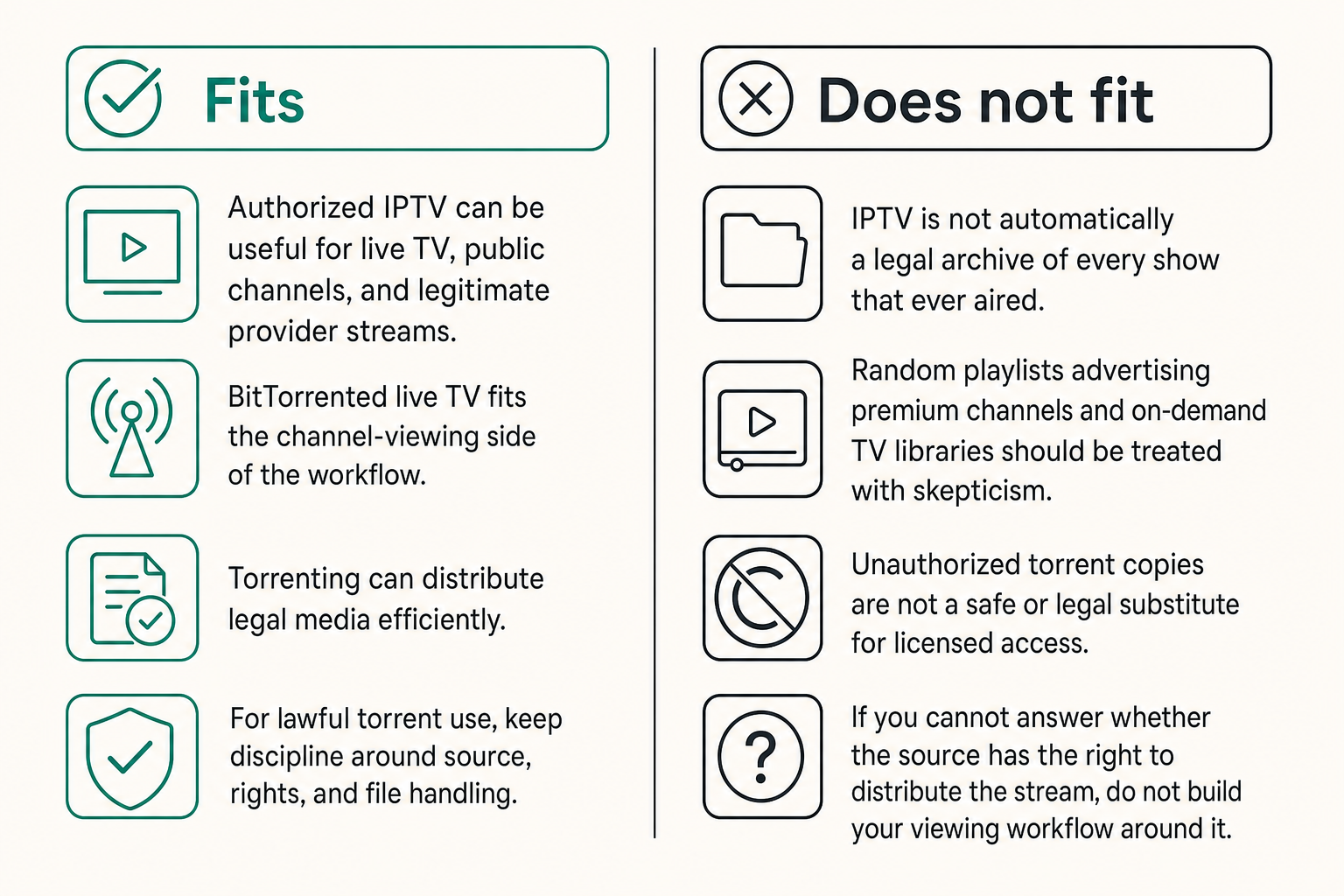
IPTV is best understood as a playlist and live-channel workflow. It is not automatically a legal archive of every show that ever aired. Authorized IPTV can be useful for live TV, public channels, and legitimate provider streams. Random playlists advertising premium channels and on-demand TV libraries should be treated with skepticism.
If your setup includes legal live channels, tools like BitTorrented live TV fit the channel-viewing side of the workflow. That is different from claiming that a copyrighted sitcom episode is freely available through any playlist you find online.
The practical question is whether the source has the right to distribute the stream. If you cannot answer that, do not build your viewing workflow around it.
Torrents require rights and discipline
Torrenting is a protocol, not a permission slip. It can distribute legal media efficiently. It can also be used to infringe copyright. For AP Bio streaming, unauthorized torrent copies are not a safe or legal substitute for licensed access.
For lawful torrent use, keep discipline around source, rights, and file handling:
- Prefer official or clearly licensed sources.
- Avoid executable files and suspicious archives.
- Verify checksums when provided.
- Keep downloads isolated from sensitive folders.
- Use reputable clients and update them.
- Seed only where redistribution is permitted.
The mistake teams make is thinking privacy tooling fixes a rights problem. It does not. Privacy tools can reduce exposure in legitimate workflows, but they do not convert unauthorized distribution into authorized access.
Home media is a custody problem
When you store media yourself, you take custody of more than files. You take custody of naming, backups, transcoding, user access, device support, subtitles, and deletion rules.
That can be worth it for legally owned media. It is also operational work. If a family member asks why subtitles disappeared or why the TV buffers after a server update, you own the answer.
A useful way to think about it is the difference between access and custody. Streaming services own most of the custody problem but can revoke access when rights move. Home media gives you more control, but you operate the stack.
Privacy, safety, and account hygiene
Avoid shady streaming mirrors
The riskiest AP Bio streaming results are usually the ones promising instant free playback with no account, no provider, and no explanation of rights. These sites often push aggressive ads, misleading play buttons, browser permission prompts, fake codec downloads, and malware-laced redirects.
Do not install a video player from a random mirror. Do not allow notifications. Do not enter payment details into an unknown site because it claims card verification is required for free viewing. Do not reuse your streaming password anywhere outside the provider.
Practical rule: if a site hides the source of its rights, pushes browser permissions, or requires strange downloads, close it.
Separate profiles, payments, and devices
Cord cutters often share households with mixed habits. One person buys episodes. Another uses a live bundle. Someone else signs in on a hotel TV and forgets to sign out.
Good account hygiene reduces support pain:
- Use separate profiles where available.
- Review authorized devices quarterly.
- Avoid saving payment details in unknown apps.
- Use unique passwords for streaming accounts.
- Enable two-factor authentication where supported.
- Remove old devices after travel.
This is not paranoia. Streaming accounts are valuable because they combine payment methods, viewing history, email addresses, and sometimes household identity.
Use VPNs and DNS tools realistically
VPNs and DNS filters can be useful for privacy, travel security, and blocking known malicious domains. They can also break legitimate streaming. Many providers enforce regional rights and may block VPN endpoints. DNS filters can block analytics or DRM-related domains that the app expects to reach.
If AP Bio streaming fails only when a VPN is on, do not assume the provider is broken. Test with and without the VPN. Check whether your use complies with the provider terms and regional licensing.
The operational goal is not to hide from every system. It is to keep your network safer while preserving lawful playback.
What breaks when AP Bio streaming is implemented badly
Link rot and fake availability
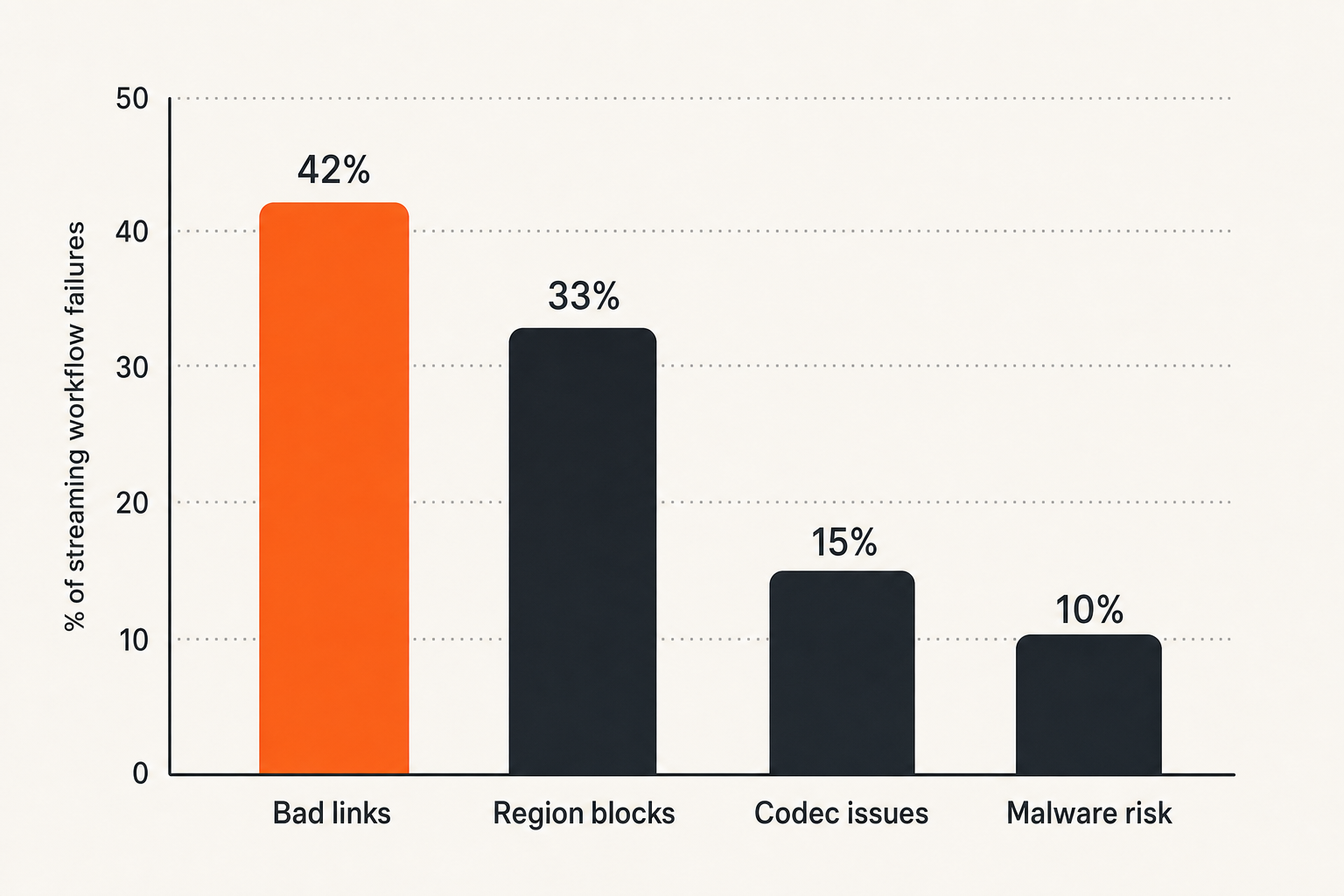
Old availability pages are a major source of wasted time. They rank, they get copied, and they remain online long after the catalog changes.
The failure mode is simple: a viewer searches, clicks a stale page, signs up for a service, and then discovers the show is not included. That is not a streaming problem. It is a verification problem.
Fix it by checking inside the provider before creating an account or paying. If the provider hides catalog details until after sign-up, be more cautious.
Region mismatch
Region mismatch is another common break. A page may be accurate for one country and useless in another. Search engines do not always make that obvious. App stores also vary by country, which means the service may not even install on your device.
When researching AP Bio streaming, include your region in the workflow, but do not blindly trust region-specific snippets. Open the provider, confirm the title, and inspect the episode page.
Codec, subtitle, and quality drift
Even legal access can disappoint if the playback quality is wrong for your setup. Captions may be missing on one device but present on another. Audio sync may fail through a soundbar. Older streaming sticks may struggle with app updates. Browser playback may cap quality compared with TV apps.
What works is testing the exact path you plan to use. Not the same service on a different device. Not a trailer. The actual episode path.
Support debt at home
Every household media system has support debt. The more custom your stack, the more you own. That does not mean custom is bad. It means you should be honest about the cost.
If you are the person who set up the streaming stick, IPTV app, torrent client, media server, DNS filter, VPN, and password manager, you are also the first support line when AP Bio streaming fails at 9:30 p.m.
Reduce that debt with simple defaults: legal sources, documented accounts, stable devices, clear naming, and fewer mystery apps.
A practical workflow for AP Bio streaming nights
One-time setup
Here is a practical implementation sequence that works for most cord cutters:
- List your active streaming subscriptions and digital stores.
- Confirm which devices are primary and fallback playback devices.
- Search official provider catalogs for A.P. Bio.
- Verify seasons, episodes, captions, and playback on the actual device.
- Decide whether subscription, rental, or purchase is the right access model.
- Save the provider and episode state in a note or watchlist.
- Remove sketchy mirrors and unknown apps from the workflow.
- Review account security and authorized devices.
- Keep a fallback option, such as rental or purchase, if subscription access changes.
This is not glamorous. It is reliable.
Night-of checklist
Before everyone sits down, run the quick version:
- Is the provider still showing A.P. Bio in your region?
- Are you signed in?
- Does the next episode play?
- Are captions and audio correct?
- Is the TV on the right input?
- Is the VPN or DNS filter interfering?
- Is there a fallback store if the catalog changed?
The practical question is how many dependencies you can validate before people are waiting.
When availability disappears
If the show disappears from a subscription service, do not panic-search. Move through the fallback path.
First, verify it is not an account or region issue. Second, check digital rental or purchase. Third, check legitimate bundle or library options. Fourth, decide whether to wait.
Waiting is underrated. Rights often move between services. Paying for a month of a new service just for one show may or may not make sense. Buying a season may be better if you rewatch. Renting may be better if you need only one episode.
The mistake teams make is treating inconvenience as an emergency. It usually is not.
How bittorrented.com fits a legal media workflow
Discovery without pretending the UI is the system
bittorrented.com is built for readers who care about streaming services, torrents, IPTV, and home media tools, but the useful framing is architectural: discovery is one layer, not the whole system.
A clean media workflow still needs rights verification, safe sources, device compatibility, privacy habits, and supportable playback. That is especially true for AP Bio streaming because search results can blur subscription access, paid access, and unauthorized mirrors.
The product fit is not we found a magic stream. The fit is helping media hobbyists reason about sources, playlists, dashboards, and viewing workflows without losing the legal and safety boundary.
Live TV and status-aware viewing
If your setup includes IPTV, live channels, or home dashboards, status matters. Is the playlist reachable? Is the player buffering? Did the client reconnect? Is the issue your Wi-Fi or the source?
That operational thinking carries over even when you are watching through mainstream services. When you understand the playback path, you debug faster and click fewer bad links.
For AP Bio streaming, the same discipline applies: verify source, verify entitlement, verify device, then watch.
Keep the boundary clear
A legal media workflow is not anti-technical. It is more technical, because it recognizes the difference between capability and authorization.
Use torrents for lawful distribution. Use IPTV for authorized streams. Use home media for content you have the right to store and play. Use licensed services and stores for copyrighted TV shows. Keep those lanes separate and your setup becomes easier to maintain.
Final checklist for AP Bio streaming in 2026
What works
What works is boring and repeatable:
- Check legitimate provider catalogs directly.
- Verify your region before trusting availability claims.
- Test playback on the real device.
- Choose subscription, rental, purchase, or bundle access intentionally.
- Track season and episode state.
- Keep torrents and IPTV limited to lawful sources.
- Avoid shady mirrors, fake players, and unknown downloads.
- Maintain account and device hygiene.
That changes the conversation from where is a link to what is the safest, cleanest way to watch.
What fails
What fails is also predictable:
- Trusting stale search snippets.
- Assuming a show is included because it appears in a global search result.
- Signing up before confirming the episode page.
- Using unauthorized torrent or IPTV sources for copyrighted episodes.
- Installing random players from mirror sites.
- Ignoring captions, DRM, device support, and network filters until viewing time.
- Building a home media setup nobody else can operate.
The mistake teams make is overvaluing the first answer and undervaluing the workflow.
Closing decision
AP Bio streaming in 2026 is not hard if you treat it as a small architecture problem. Confirm rights. Confirm region. Confirm access. Confirm playback. Keep a sane fallback. Do not let a sketchy link become part of your household media stack.
The best cord-cutting workflow is not the one with the most apps. It is the one that gets you to a legal, reliable stream with the least confusion and the fewest unsafe detours. That is the practical way to handle ap bio streaming, and it scales to almost every other show you care about.
Try bittorrented.com
You are writing for readers who want practical, up-to-date guidance on streaming services, torrents, IPTV, and home media tools. Try bittorrented.com