World wide technology sounds like a broad phrase until your home media setup breaks on a Friday night. The IPTV playlist loads but half the channels buffer. The torrent finishes but the file will not play on the living room TV. The streaming app works on one device and fails on another. The problem is not one bad app.
Teams think the problem is access to more sources. The real problem is architecture: how discovery, legality, privacy, bandwidth, playback, storage, and support fit together across services and devices.
That changes the conversation. For cord cutters, torrent users, IPTV viewers, and media tech hobbyists in 2026, world wide technology is less about chasing every new platform and more about building a workflow that survives real-world use.
The practical question is simple: can your media stack find legal content, stream it reliably, protect your household, and recover cleanly when something fails?
Table of contents
- World wide technology is a workflow problem
- Map your media stack before adding tools
- World wide technology for cord cutters in 2026
- Torrent workflows that stay legal and usable
- IPTV reliability is mostly operations
- Privacy, safety, and trust boundaries
- Home media infrastructure that does not collapse
- Implementation sequence for a clean media workflow
- Common failure modes in world wide technology stacks
- Where bittorrented.com fits
World wide technology is a workflow problem
The mistake teams make is treating world wide technology as a list of apps. Install a streaming service, add an IPTV player, run a torrent client, buy a NAS, maybe add a VPN, and assume the stack is complete.
It is not complete. It is just connected enough to fail in confusing ways.
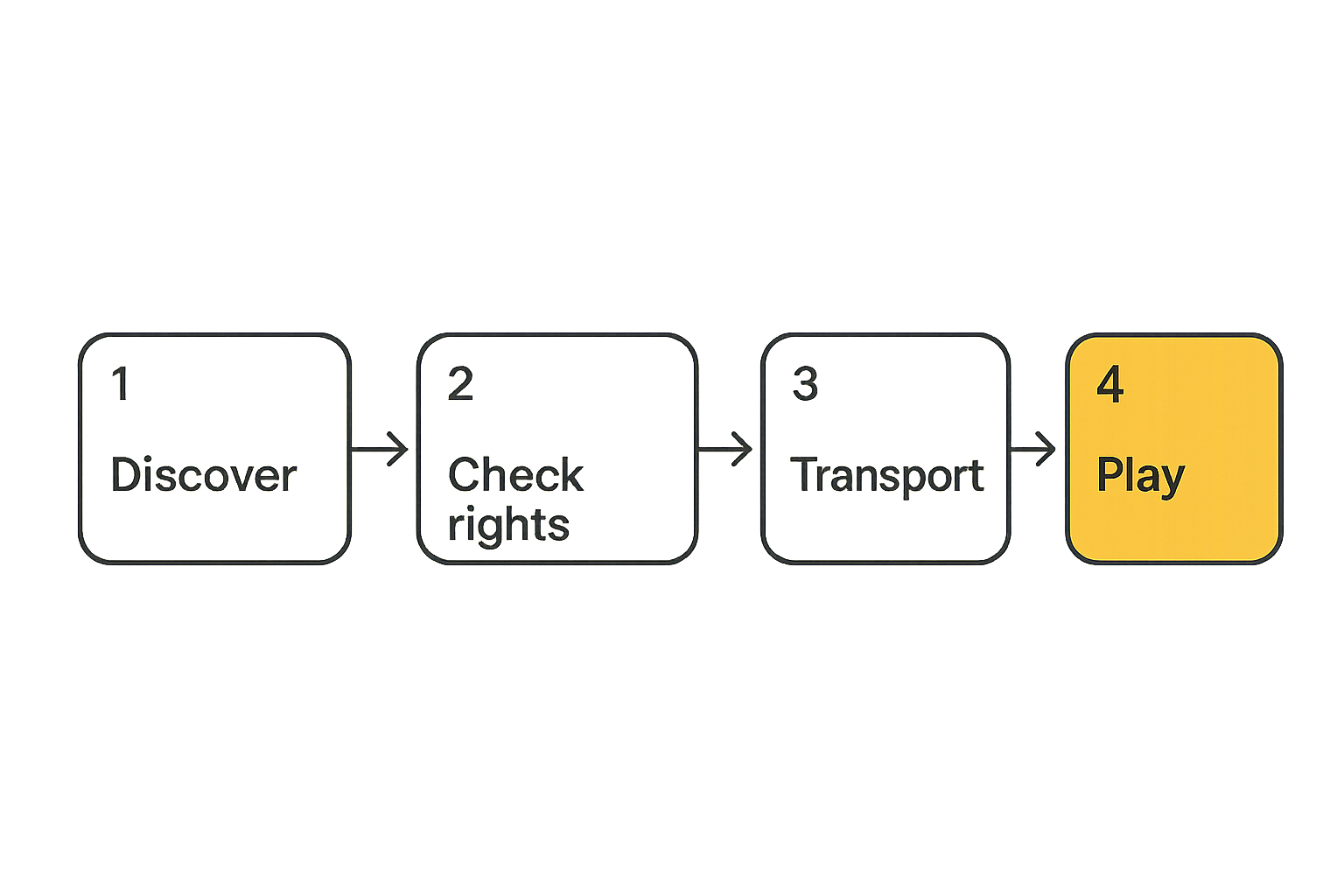
A useful way to think about it is a small media supply chain. Content is discovered, checked for rights and safety, transported over a network, stored or streamed, decoded by a device, watched by a person, and then supported when something breaks. Every step has state. Every step has trust assumptions.
The access layer is not the system
Search boxes, IPTV playlists, torrent indexes, and streaming app catalogs are access layers. They help you find things. They do not guarantee quality, legality, playback compatibility, or continuity.
If you only optimize the access layer, you create a bigger queue of things that might not work. That is how many home setups become noisy: more apps, more bookmarks, more playlists, more duplicate files, more confused household users.
The practical question is not how many sources you can connect. It is how confidently you can move from discovery to playback without violating rights, exposing private data, or creating support work for yourself.
The home network is part of the product
A streaming platform can be stable and your experience can still be poor. Wi-Fi congestion, cheap router firmware, overloaded DNS, bad peering, old HDMI devices, weak clients, and misconfigured transcoding can all look like content problems.
For cord cutters, the home network is not plumbing. It is part of the media product. If your IPTV player, torrent box, media server, and TV client all share the same weak wireless path, you do not have a resilient system. You have a single point of frustration.
Practical rule: Treat the home network as a production dependency. If it affects playback, it belongs in the design, not in the troubleshooting afterthought pile.
Legal and safe use has to be designed in
Torrent and IPTV technology can be used legally and usefully. The risk appears when teams blur the protocol, the source, and the rights. A torrent is a transport method. IPTV is a delivery format. Neither one tells you whether the content is licensed, safe, or appropriate to access.
Design for legal use upfront. Favor authorized sources, public domain media, creator-approved distribution, legitimate live TV access, and personal media libraries. Keep unknown files away from primary devices until they are scanned and inspected. Do not make your living room TV the first place a strange file is tested.
Related reading from our network: privacy-minded users face similar workflow problems with identity, devices, metadata, and backups in end-to-end encrypted messaging.
Map your media stack before adding tools
Most media problems get worse when the first response is buying another box. A new streaming stick does not fix bad source hygiene. A faster internet plan does not fix EPG drift. A bigger hard drive does not fix duplicate retention.
Mapping sounds boring. It is the cheapest way to find the actual bottleneck.
Sources, transport, playback, and support
Break the stack into four layers:
- Source: streaming subscriptions, legal torrents, public media archives, personal rips where permitted, IPTV providers, radio streams, news feeds.
- Transport: HTTPS streaming, BitTorrent, local network shares, IPTV playlist delivery, CDN paths, VPN routes where appropriate.
- Playback: TV apps, set-top boxes, browsers, mobile devices, media servers, codecs, subtitles, audio formats.
- Support: logs, file naming, playlist refresh, account recovery, backups, parental controls, and household instructions.
When a stream fails, name the layer before changing tools. If source rights are unclear, adding transport speed is irrelevant. If playback lacks codec support, changing the index will not help. If support is undocumented, every failure becomes a new investigation.
A practical inventory model
Use a simple inventory before changing anything:
| Layer | Example asset | Owner | Failure signal | Action |
|---|---|---|---|---|
| Source | Licensed IPTV playlist | Household admin | Channels vanish | Validate provider and refresh |
| Transport | Router and DNS | Network owner | Buffering across apps | Check latency and packet loss |
| Playback | Living room TV client | Device owner | File opens on phone only | Check codec and subtitles |
| Storage | Media library | Library owner | Duplicates and missing art | Rename, dedupe, rescan |
| Support | Setup notes | Everyone | Same issue repeats | Document fix and rollback |
The table is not bureaucracy. It prevents random fixes.
What breaks when the map is missing
What breaks in practice is ownership. Nobody knows whether the issue belongs to the IPTV provider, the player, the network, the device, or the file. The household starts rebooting things. Someone deletes a playlist. Someone else changes DNS. Now you have three changes and no baseline.
A mapped stack lets you ask better questions: did only live channels fail, or did all streaming fail? Did local playback work? Did one device fail or all devices? Did the issue start after a playlist refresh, router update, or media server scan?
That changes the conversation from blame to diagnosis.
World wide technology for cord cutters in 2026
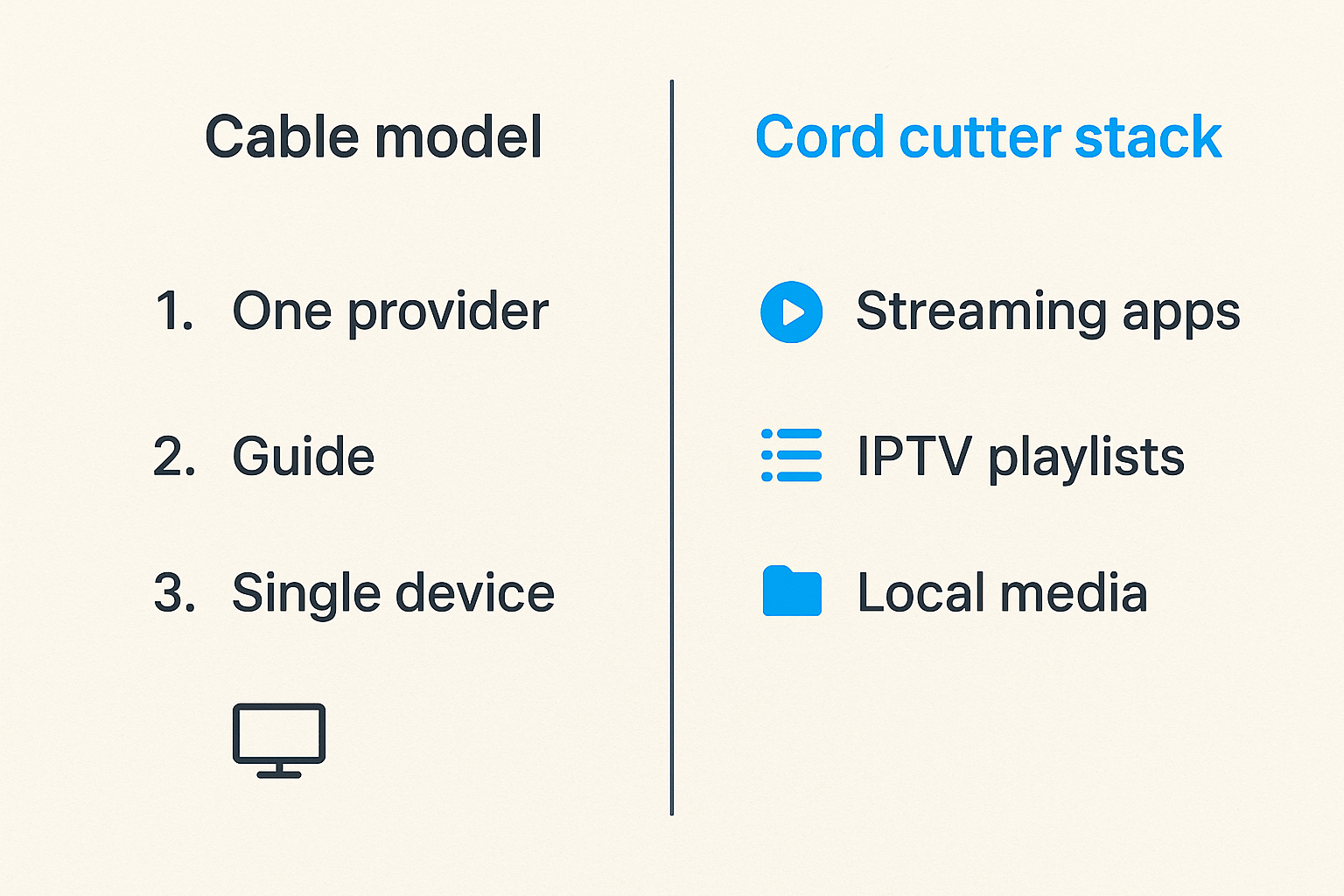
World wide technology gives cord cutters access to more content paths than cable ever did. That is useful, but it also means the old cable model of one provider, one remote, and one support number no longer applies.
Cord cutting is an operating model. You are now the integrator.
Live TV is a state problem
Live TV feels simple because the interface is familiar: channel, guide, play. Underneath, it depends on playlist availability, guide alignment, stream health, geographic rights, device support, and network timing.
If you use IPTV for legitimate live channels, separate three things: the M3U or playlist, the EPG data, and the player configuration. When those get mixed together, troubleshooting becomes painful. A channel may be valid while guide data is wrong. A guide may be correct while the stream is down. A player may cache stale entries even after the source is fixed.
For legal playlist viewing, a dedicated page such as live TV from IPTV playlists is useful when you want to keep live channel discovery separate from experiments and file-based media.
Practical rule: Manage IPTV as stateful data, not as a static file. Playlists, guide data, logos, groups, and cache rules all drift.
On-demand streaming needs fallback paths
On-demand streaming fails differently. A show may leave a catalog. A device app may age out. A login may expire. A subtitle track may be missing. A household member may not know which service owns which title.
The operator answer is not piracy. It is fallback planning. Maintain a simple source-of-truth list for subscriptions, devices, and legal alternatives. Know which services are household-critical and which are occasional. Cancel what you do not use, but do not remove the only reliable path to content people actually watch.
When you maintain personal media, keep it cleanly separated from streaming apps. A local media server should not become a dumping ground for random files. It should contain rights-cleared, household-approved media with known provenance and predictable playback.
News, sports, and local content need separate rules
News, sports, and local channels deserve their own policy. They are time-sensitive, region-sensitive, and often rights-sensitive. A movie can wait until tomorrow. A live match cannot. A weather alert should not depend on an experimental playlist.
Use stable, authorized sources for local and emergency information. If you use multiple news feeds, keep them labeled and tested. BitTorrented also separates current media discovery from other browsing surfaces, so a page like streaming and media news can support research without turning your playback stack into a mixed feed of unrelated experiments.
Related reading from our network: local groups face a similar coordination problem when they separate intake, routing, follow-up, and trust in a community-first local network model.
Torrent workflows that stay legal and usable
Torrenting is often discussed as a legal argument or a speed trick. For operators, the better framing is workflow control.
Can you identify what you are downloading? Do you have the right to access and share it? Can you inspect it safely? Can you store it predictably? Can you remove it when it is no longer needed?
Separate protocol from content rights
BitTorrent is a protocol. Content rights are a separate question. Open-source ISOs, public domain films, creator-distributed media, academic datasets, and game patches may all be distributed by torrent legitimately. Copyrighted commercial content shared without permission is a different matter.
Do not let the tool decide the ethics. Build a rights check into discovery. If the source does not make permission clear, slow down. If the content looks too good to be legitimate, treat that as a risk signal, not a bonus.
A legal-first torrent workflow usually includes source verification, comments or reputation review where available, file inspection, malware scanning, and isolation before playback on shared devices.
Use metadata as an operating control
Metadata is not cosmetic. It is how your library stays searchable, safe, and supportable.
Track at least:
- Source and date acquired
- License or rights basis
- File type and codec
- Language and subtitle status
- Storage location
- Whether the file is approved for shared playback
If you browse distributed hash table discovery surfaces, keep that activity in a research lane. A DHT index can expose what exists on the network, but it does not validate rights or safety. Use a controlled surface such as DHT torrent browsing as discovery, then apply your own legal and safety checks before anything enters the household library.
Seed, store, and remove with intent
Seeding is part of how torrents work, but it should not be accidental. For legal torrents, decide your seeding policy: ratio, duration, bandwidth limits, and storage cap. For anything you do not have rights to share, do not participate.
Storage should also have exit rules. Many home libraries become unmanageable because nothing ever expires. Keep long-term items only when they are legal, useful, named correctly, and playable on the devices that matter. Everything else should be quarantined, fixed, or removed.
Practical rule: A torrent download is not complete when the progress bar reaches 100 percent. It is complete when rights, safety, metadata, playback, seeding, and retention are resolved.
IPTV reliability is mostly operations
IPTV problems are usually described as buffering. In practice, buffering is only one symptom. The root cause may be playlist churn, provider instability, DNS issues, Wi-Fi interference, underpowered players, bad guide data, or stream formats your device handles poorly.
The mistake teams make is judging an IPTV setup by channel count. Channel count is cheap. Reliability is the work.
Playlist hygiene matters more than playlist size
A 20,000-channel playlist that nobody can navigate is not a feature. It is an incident generator. Groups are inconsistent, duplicates pile up, dead links remain, and household users lose trust in the system.
A better playlist has fewer channels, clearer groups, tested favorites, and refresh rules. Keep separate lists for production viewing and testing. Do not let experimental imports overwrite the stable household list.
A useful process:
- Import new playlist into a test profile.
- Remove obvious duplicates and dead entries.
- Validate core channels during peak viewing hours.
- Match EPG entries and logos.
- Promote only tested groups to the production profile.
- Keep the old profile until the new one proves stable.
EPG drift creates support debt
EPG drift is when guide data no longer matches the channels. It creates subtle pain. Users click one program and get another. Recordings miss the target. Favorites appear broken even when streams still work.
Treat EPG as its own dependency. Track source, update interval, timezone, channel IDs, and cache behavior. If your player allows manual mapping, export or document it. Rebuilding guide mappings from scratch is avoidable work.
Buffering is not always bandwidth
More bandwidth does not fix every buffering problem. If one channel buffers while another works, the issue may be upstream. If all live streams fail but Netflix works, it may be playlist provider routing or player handling. If local media stutters, it may be Wi-Fi, transcoding, or disk throughput.
Diagnose by isolation:
- Test wired versus wireless.
- Test one stream on two devices.
- Test two streams on one device.
- Test local playback versus internet streaming.
- Check CPU load on the player or media server.
This prevents the classic mistake: upgrading internet service when the actual bottleneck is a weak TV app.
Privacy, safety, and trust boundaries
Privacy in media technology is not only about hiding traffic. It is about limiting what each layer can learn, store, and leak. Streaming apps know viewing behavior. IPTV providers may see requests. Torrent peers can see participating IP addresses. Smart TVs may collect device telemetry. Browsers may leak identifiers.
You do not need paranoia. You need boundaries.
Decide what your devices are allowed to know
A household media stack often has several device classes: trusted admin machines, streaming clients, guest devices, storage servers, and experimental boxes. They should not all have the same access.
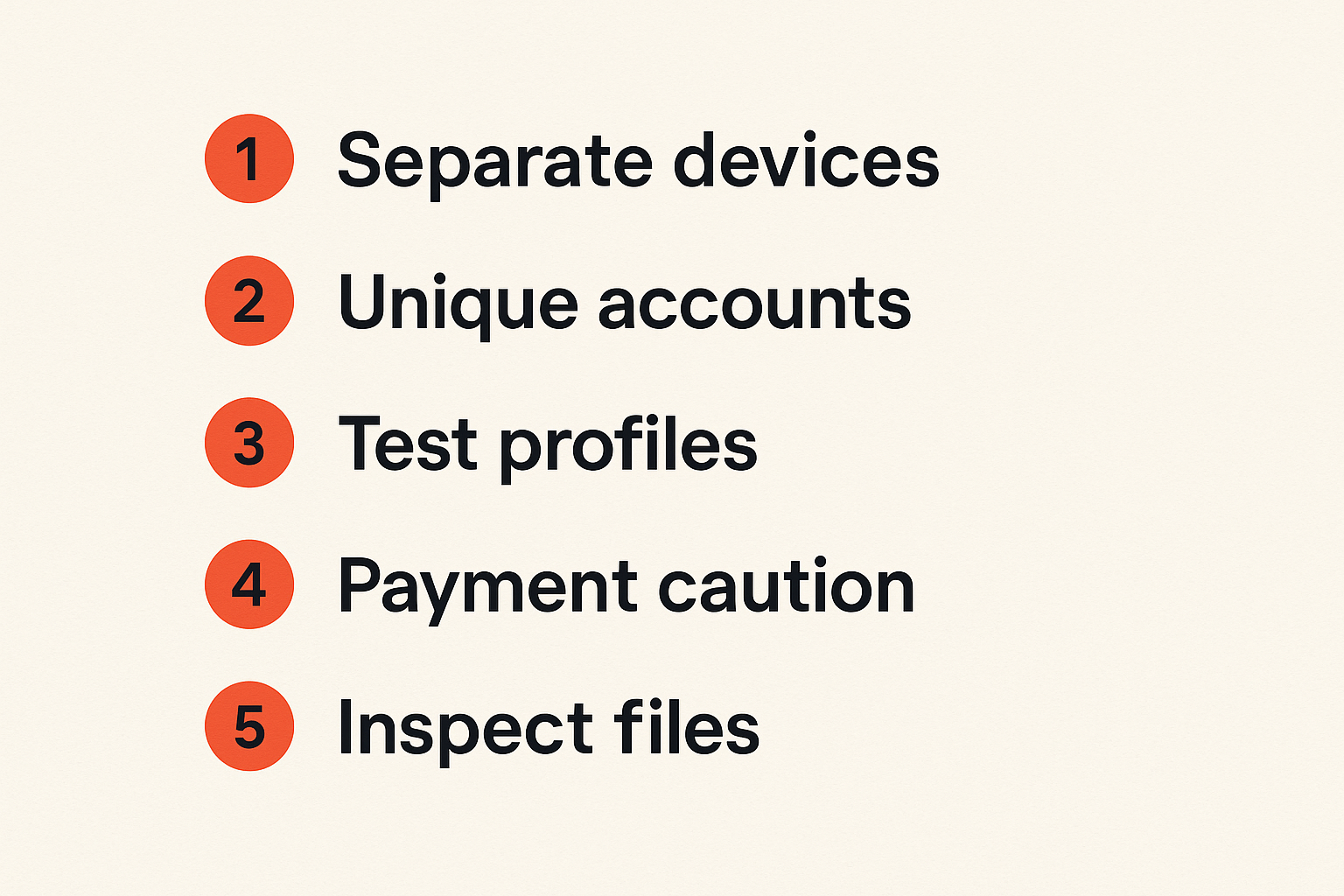
Put admin dashboards behind stronger credentials. Keep guest devices away from library shares. Avoid signing every app into the same primary account. Disable unnecessary telemetry where possible. Use separate profiles for children, guests, and testing.
For network privacy tools, be realistic. A VPN may protect some traffic from local network or ISP visibility, but it does not make unsafe files safe, unlicensed access licensed, or malicious apps trustworthy. Privacy tools reduce specific exposure. They do not remove judgment.
Do not mix experiments with family playback
The fastest way to lose household trust is to let experiments break the main TV. Keep a testing lane. Use a secondary device, separate player profile, or isolated container for unknown playlists, new add-ons, beta apps, and file inspection.
Production playback should be boring. It should have known sources, known credentials, known parental controls, and known rollback steps. If you want to test a new IPTV player or automation script, do it away from the device everyone uses.
Practical rule: Separate production viewing from experimentation. Your family room is not a staging environment.
Keep identity, payments, and media separate
Identity sprawl is a common hidden risk. People reuse one email, one password, and one payment method across streaming trials, IPTV services, forums, indexers, and device stores. When one weak service leaks, everything becomes harder to clean up.
Use a password manager. Use unique credentials. Prefer reputable payment methods and avoid sending sensitive financial details to unknown providers. Cancel unused trials. Keep receipts and renewal dates. If a service is not trustworthy enough for your identity and payment data, it is not trustworthy enough to anchor your media workflow.
Related reading from our network: product teams face similar trust and launch boundaries when they build focused software workflows around specialty products.
Home media infrastructure that does not collapse
Home media infrastructure fails slowly before it fails loudly. First the library gets messy. Then storage fills. Then transcoding spikes. Then backups stop. Then a disk dies or a server update breaks playback.
The operator answer is not to make the setup enterprise-grade. It is to make the basics observable and recoverable.
Storage is a lifecycle decision
Storage is not just capacity. It is a lifecycle: acquire, inspect, name, store, back up, watch, archive, delete. If you skip the lifecycle, storage becomes a junk drawer.
Use predictable folders. Keep temporary downloads separate from approved library content. Do not let incomplete files appear in the media server. Use checksums or at least periodic scans for important archives. Back up irreplaceable personal media first. Movies and shows from legal services can often be reacquired. Family videos cannot.
Transcoding should be the exception
Transcoding is useful, but it is also where many home servers collapse. If every stream transcodes, the server becomes the bottleneck. The better approach is to standardize on formats your main clients can direct play.
Check the common denominator: container, video codec, audio codec, subtitles, bitrate, and HDR support. A cheap TV client may struggle with formats that a phone handles easily. If you must transcode, know the CPU or GPU limits before multiple users depend on it.
Automation needs guardrails
Automation can rename files, fetch artwork, refresh playlists, update apps, monitor storage, and restart services. It can also delete the wrong folder, overwrite a good playlist, or import questionable content at scale.
Use dry runs where possible. Log changes. Keep backups before bulk edits. Require manual approval before new sources enter the approved library. Automation should reduce repetitive work, not bypass judgment.
A good automation rule is simple: the script can prepare, but a human approves promotion into the shared library.
Implementation sequence for a clean media workflow
A clean media workflow does not start with a shopping list. It starts with constraints. What content is legal and important? Who watches it? Which devices matter? What privacy level is required? What failure is unacceptable?
Once those answers are clear, the build is easier.
Start with policy before hardware
Write a one-page household media policy. It does not need legal language. It needs operating rules:
- Which sources are approved.
- Which torrent uses are allowed.
- Which IPTV sources are authorized.
- Where unknown files are inspected.
- Which device is production playback.
- Who can change router, DNS, or server settings.
- What gets backed up.
- What gets deleted.
This sounds formal until it prevents a Saturday night outage.
Build the minimum observable stack
Build only what you can observe. At minimum, you should know whether a failure is source, network, playback, or storage.
A practical minimum stack looks like this:
- Stable router with visible client list.
- Separate Wi-Fi names or VLANs if you can manage them.
- One production streaming device.
- One test device or profile.
- One media server or library location.
- Basic logs for server and player errors.
- A notes file with credentials, renewal dates, and rollback steps.
You do not need a rack. You need enough visibility to avoid guessing.
Test failure paths before depending on them
Do not wait for a failure to learn your recovery path. Test it.
Can you restore the media server database? Can you roll back a playlist? Can you play local media if the internet is down? Can someone else in the household use the backup streaming path? Can you replace a failed device without rebuilding everything from memory?
The practical sequence is:
- Document the current working state.
- Export playlists, server config, and key settings.
- Back up personal media and metadata.
- Change one thing at a time.
- Test the top five household viewing scenarios.
- Keep rollback files until the new setup is stable.
Common failure modes in world wide technology stacks
World wide technology stacks fail for predictable reasons. The names change, the pattern does not. Too many sources. No rights policy. No separation between testing and production. No owner for the network. No logs. No rollback.
Once you recognize the pattern, the fixes become mechanical.
What works
What works is boring and repeatable:
- Small number of trusted sources.
- Clear distinction between legal torrents, licensed streaming, IPTV, and personal media.
- Production and test profiles kept separate.
- Playlist refreshes performed deliberately.
- Media files named consistently.
- Main playback devices chosen for codec support, not hype.
- Backups for personal and hard-to-replace data.
- Simple notes that explain how to recover.
This is not less technical. It is more disciplined.
What fails
What fails is the pile-on approach:
- Adding sources without checking rights.
- Importing huge IPTV playlists into the main player.
- Using one account and password everywhere.
- Letting downloads land directly in the approved library.
- Running all playback through weak Wi-Fi.
- Assuming a VPN fixes trust, legality, or malware.
- Updating server, player, and router on the same day.
- Troubleshooting by changing five settings at once.
The mistake teams make is confusing activity with control. More changes can make the system less knowable.
How to diagnose without guessing
Use a simple decision path:
- Is the problem one title, one channel, one app, one device, or everything?
- Does local playback work?
- Does wired playback work?
- Does another player handle the same stream or file?
- Did a playlist, app, router, DNS, or server change recently?
- Can you roll back to the last known good state?
If you cannot answer those questions, stop changing settings and collect evidence. Guessing is expensive because it destroys the baseline.
Where bittorrented.com fits
The useful role for bittorrented.com is not to pretend the UI is the whole system. The value is helping readers think clearly about streaming services, torrents, IPTV, and home media tools as connected workflows.
A good media setup is not only about finding content. It is about knowing what is legal to access, what is safe to open, what will play on your devices, and what to do when the stack breaks.
Use it as a discovery and workflow layer
Use bittorrented.com as a practical layer for research, discovery, and operator thinking. Keep legal and safety checks in the workflow. Use separate lanes for live TV, DHT research, news, and home media planning. Do not collapse everything into one overloaded player or one messy folder.
This is the same architecture lesson repeated across the stack: discovery is not approval, download is not completion, playback is not reliability, and privacy is not automatic.
Keep the operator mindset
The operator mindset is skeptical of magic boxes and miracle apps. It asks what breaks in practice. It names owners. It keeps rollback paths. It treats household trust as something to protect.
World wide technology in 2026 gives cord cutters more reach than ever, but reach without workflow becomes noise. Build the workflow first. Then choose the tools.
Try bittorrented.com
bittorrented.com is for readers who want practical, up-to-date guidance on streaming services, torrents, IPTV, and home media tools. If you want world wide technology without the guesswork, Try bittorrented.com.