Applied industrial technologies sounds like something that belongs in a factory, not in a living room with an IPTV playlist, a torrent client, a NAS, and three streaming sticks fighting for bandwidth.
That is exactly why the phrase is useful. Most home media setups fail for the same reason small industrial systems fail: nobody owns the workflow. Devices get added. Apps get swapped. Storage fills up. Feeds break. Playback becomes a troubleshooting session.
Teams think the problem is finding the best app. The real problem is designing a media workflow that can absorb bad inputs, network glitches, privacy constraints, storage limits, device differences, and household support requests.
The practical question is not whether applied industrial technologies are too serious for cord cutters, torrent users, IPTV viewers, and media hobbyists. The practical question is whether your home media stack behaves like a controlled system or a pile of disconnected parts.
Table of contents
- Applied industrial technologies is a workflow model not a gadget category
- Map the media supply chain before you buy tools
- Build the media pipeline with industrial style controls
- What works for torrents IPTV and streaming in 2026
- What fails when teams copy consumer streaming habits
- Privacy safety and ownership are operating requirements
- Measure the system instead of arguing about apps
- Implementation blueprint for a resilient home media stack
- Where bittorrented.com fits into this workflow
- Closing checklist for applied industrial technologies in home media
Applied industrial technologies is a workflow model not a gadget category
Why the phrase belongs in a home media conversation
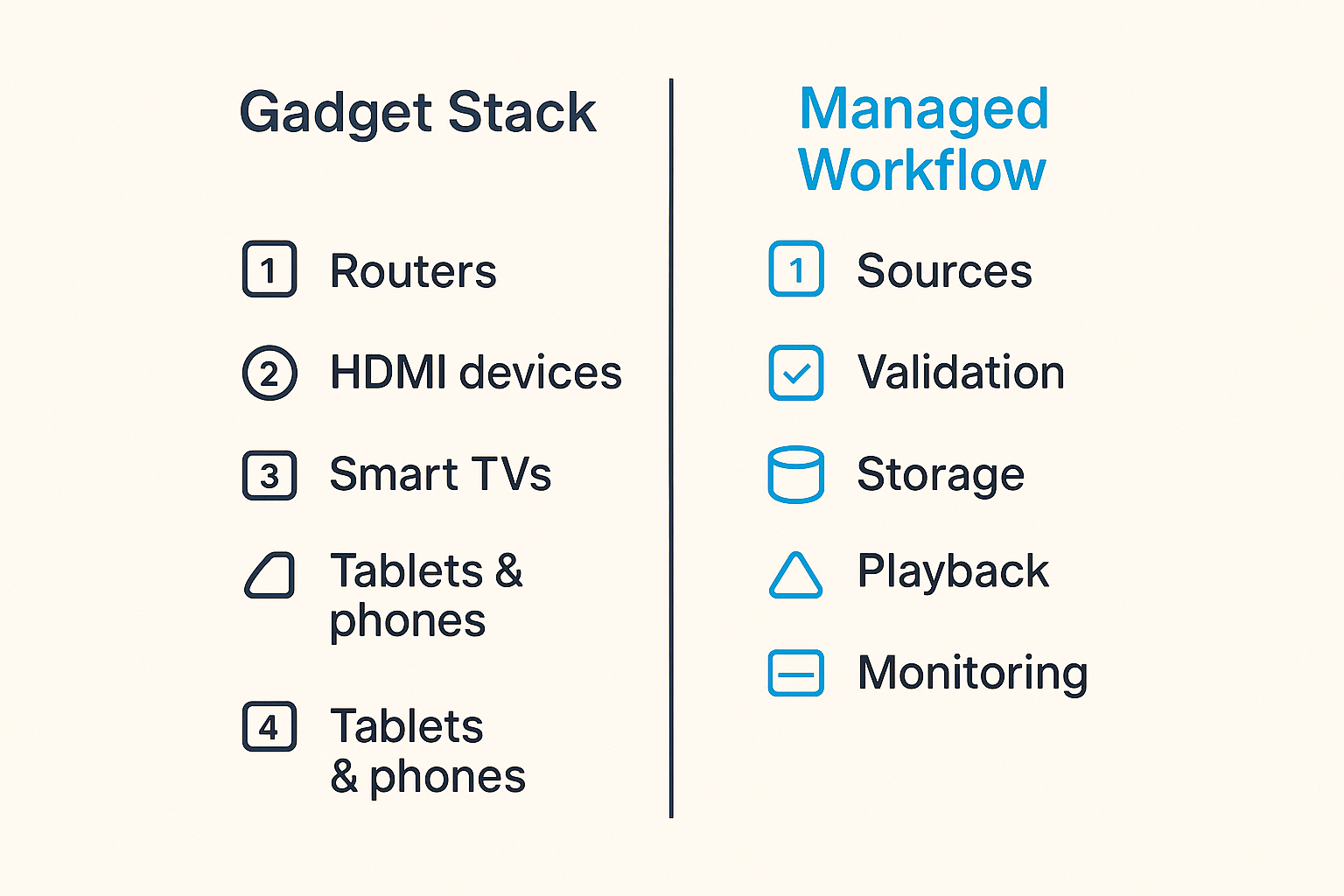
In a factory, applied industrial technologies usually means components, controls, sensors, uptime, supply chains, maintenance, and repeatable processes. In home media, the parts are different, but the operating problem is familiar.
You have inputs: legal torrent files, public domain media, Linux ISOs, open licensed archives, paid streaming services, licensed IPTV playlists, local recordings, podcasts, audiobooks, and personal media.
You have infrastructure: routers, DNS, VPNs, storage, media servers, indexers, metadata agents, transcoders, HDMI devices, smart TVs, tablets, and phones.
You have operators: the person who built the system, the family member who just wants live TV to work, the guest on Wi-Fi, and the future version of you who forgot why a cron job exists.
That changes the conversation. You stop asking which app is the best and start asking how the whole chain behaves when one part is slow, unavailable, expired, misconfigured, or unsafe.
Practical rule: Treat every media source as an input to a controlled workflow, not as a shortcut around the workflow.
This framing is especially useful in 2026 because the stack is more fragmented. Streaming services change catalogs. IPTV playlists rotate. Devices enforce different codec support. Home networks carry more cameras, calls, games, and smart devices. Media servers are no longer just hobby projects; they are household infrastructure.
The architecture shift from apps to systems
The mistake teams make is building around the device they touch most. A viewer buys a streaming stick, installs an IPTV app, adds a torrent client on a desktop, mounts a USB drive, and calls it done. It works until it does not.
A useful way to think about it is this comparison:
| Approach | What it optimizes | What breaks in practice | Better operator question |
|---|---|---|---|
| App first | Fast setup | No shared state, weak recovery, duplicate downloads | Where does state live |
| Device first | Living room convenience | Codec gaps, storage limits, inconsistent updates | Which device is only a client |
| Source first | More content paths | Trust and rights confusion, noisy feeds | Which sources are approved |
| Workflow first | Reliability and control | Requires planning | What is the lifecycle from discovery to playback |
The workflow-first model is not glamorous. It is also the only model that scales past one person and one device.
Related reading from our network: privacy teams face a similar shift from app choice to operating model in secure messaging apps in 2026, especially around metadata, devices, and retention.
Map the media supply chain before you buy tools
Sources rights and trust boundaries
Before you touch software, write down your source classes. This is boring, but it prevents most downstream mess.
A practical source map looks like this:
- Paid streaming services with account-based access
- Licensed IPTV playlists from legitimate providers
- Free ad-supported streaming channels
- Legal torrents such as public domain films, open source distributions, creator-released media, and archives
- Personal rips and recordings where you have the right to store and play them
- Podcasts, internet radio, and public feeds
- Local family videos and photos
Each source class has different rules. Paid streaming usually should stay in its official app. Licensed IPTV belongs in a player that can handle EPG data, playlist changes, and credential rotation. Legal torrents need validation, storage policy, seeding policy, and malware-aware handling. Personal media needs backup and access control.
Do not mix all of that into one folder called media and hope your server figures it out.
Practical rule: If two media sources have different legal, privacy, or operational requirements, they should have different labels, folders, policies, or accounts.
Trust boundaries matter. A torrent metadata file from a public swarm is not the same trust level as a file you encoded yourself. A playlist URL from a paid provider is not the same as a random pasted M3U link. A smart TV app is not the same trust level as a self-hosted player on a device you patch.
Storage network and playback as one chain
The home media supply chain has four physical constraints: disk, CPU, network, and display compatibility.
Disk decides how long you can keep media, how often you prune, and whether you can maintain separate libraries for kids, guests, and adults. CPU decides whether transcoding is cheap or painful. Network decides whether playback fails during dinner. Display compatibility decides whether files play directly or turn into a transcoding storm.
Many teams optimize storage first because disks are easy to buy. The better move is to map the playback path:
- Where does the media enter the system
- Where is it validated
- Where is it stored
- Which service indexes it
- Which device plays it
- What happens when it fails
If the answer to step six is someone yells from the couch, the architecture is not finished.
For live channel workflows, a dedicated IPTV surface is usually cleaner than burying playlists inside a general media library. For example, a household that separates VOD from channels can use a live TV interface like BitTorrented live TV while keeping storage-backed media in a different path.
Build the media pipeline with industrial style controls
Ingest validate store serve observe
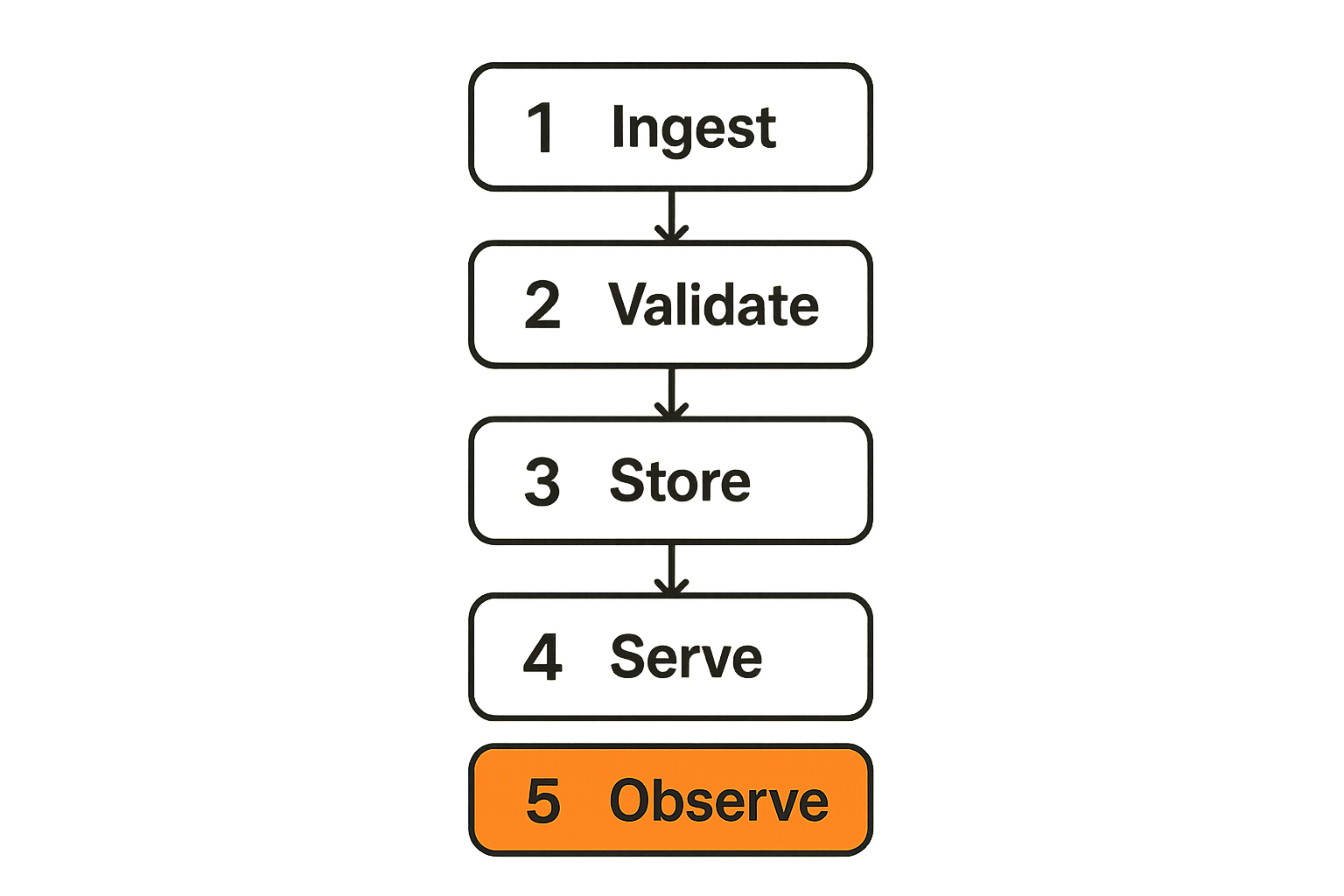
Applied industrial technologies become practical when you reduce the media stack to five verbs: ingest, validate, store, serve, observe.
Ingest is how content or channel data enters. That might be a torrent client, an IPTV playlist URL, a podcast feed, a manual upload, or a sync job.
Validate is where you check format, source, rights, metadata, file integrity, naming, malware risk, and basic playability. For torrents, this includes being careful with executable files and archives. For IPTV, it includes checking whether a playlist is from a legitimate provider and whether credentials are being handled safely.
Store is the durable layer. It should have predictable paths, quotas, backups for personal media, and deletion rules for temporary media.
Serve is the playback layer: media server, IPTV player, streaming device, web client, or mobile app.
Observe is the part most hobby setups skip. Logs, error counts, storage alerts, failed playback reports, and bandwidth symptoms are what let you fix the system before people lose trust in it.
A simple pipeline might look like this:
/source/inbox
  legal-torrents/
  iptv-playlists/
  personal-uploads/

/validation
  quarantine/
  passed/
  rejected/

/media
  movies/
  shows/
  music/
  books/
  personal/

/logs
  ingest.log
  playback.log
  storage.log
This is not enterprise theater. It is a way to avoid mystery folders and half-working automations.
Idempotency retries and backpressure for media
The language of APIs applies cleanly to home media. Idempotency means the same job can run twice without creating duplicates. Retries mean temporary failures do not require manual babysitting. Backpressure means the system slows intake when storage, CPU, or bandwidth are saturated.
For example, if an import script sees the same file twice, it should not create two library entries. If a metadata lookup fails, it should retry later instead of blocking the whole library. If disk space drops below a threshold, new downloads should pause before the filesystem fills.
A minimal policy file can be enough:
media_pipeline:
  min_free_space_gb: 250
  duplicate_strategy: skip_if_hash_exists
  failed_metadata_retry_hours: 12
  quarantine_unknown_archives: true
  transcode_limit: 2
  iptv_playlist_refresh_minutes: 60
What breaks in practice is not the absence of advanced tooling. It is the absence of basic control points. If everything writes directly into the final library, every error becomes visible to viewers.
Related reading from our network: video and distributed workloads have similar routing, validation, and capacity tradeoffs in this architecture guide to cloud computing companies.
What works for torrents IPTV and streaming in 2026
Legal torrents and licensed IPTV need different controls
Torrenting is a transport method, not a license. IPTV is a delivery format, not proof of rights. The operator job is to keep the source, rights, and workflow clear.
For legal torrents, the useful controls are:
- Source allowlists for trusted archives, creators, and distributions
- Hash checks and file type checks
- Quarantine for executable content, compressed archives, and unknown scripts
- Separate temporary and final storage
- Clear seeding rules aligned with your bandwidth and the source terms
- VPN and DNS choices based on privacy needs, not magical thinking
For licensed IPTV, the useful controls are different:
- Provider legitimacy checks before adding playlists
- Separate credentials for services when possible
- Playlist refresh schedules
- EPG validation
- Channel group normalization
- Backup playback option for high-use channels
- Household profiles where supported
The mistake teams make is treating both workflows as content pipes. They are not. Torrents are distributed file transfer. IPTV is live or scheduled stream delivery. They fail differently and need different recovery paths.
What works in day to day operation
What works is boring and repeatable:
- Keep paid streaming inside official apps unless you have a clear legal and technical reason not to
- Keep licensed IPTV playlists separate from downloaded libraries
- Keep personal media backed up separately from replaceable media
- Keep temporary downloads out of final libraries until validated
- Keep device clients simple and centralize state on a server or NAS
- Keep logs long enough to troubleshoot, but not forever
- Keep account credentials out of shared notes and random devices
A useful day-to-day workflow is:
- Discover a source or channel
- Check whether it is legal and trustworthy
- Add it to the correct input class
- Validate format, metadata, and playback
- Move it into the correct library or playlist group
- Monitor playback failures and storage impact
- Prune, rotate, or archive based on policy
This is where applied industrial technologies become less abstract. You are not making the system heavier. You are removing decisions from the moment when someone just wants to watch something.
What fails when teams copy consumer streaming habits
The failure modes that show up first
Consumer streaming habits are built around one service, one account, and one app doing most of the work. Home media stacks are different. They cross sources, devices, networks, and storage layers.
The first failures are predictable:
| Failure mode | Common symptom | Root cause | Practical fix |
|---|---|---|---|
| Playlist drift | Channels disappear or duplicate | No refresh and validation process | Scheduled refresh plus channel grouping |
| Duplicate media | Same title appears multiple times | No hash or naming policy | Deduplicate by hash and normalized metadata |
| Buffering | Streams stall at peak hours | Wi-Fi, transcoding, or upstream limits | Measure path and reduce concurrent transcodes |
| Storage exhaustion | Downloads fail or server crashes | No quota or cleanup policy | Minimum free space rule and lifecycle tiers |
| Unsafe files | Strange scripts or executables appear | No quarantine | Validate before final library import |
| Credential sprawl | Accounts on too many devices | No access boundary | Centralize where possible and rotate credentials |
The pattern is simple: the system accepts too much, too directly, with too little context.
Practical rule: Anything that can enter the system automatically must be validated automatically before it becomes visible to viewers.
Why convenience stacks become support stacks
The convenience stack says yes to everything. Add another app. Add another playlist. Add another download folder. Add another device. Add another remote.
At first, that feels flexible. Then every viewer becomes a beta tester. The person who built the setup becomes support. Nobody knows whether a failure is the source, the network, the server, the player, the codec, the subscription, or the file.
This is why operators should write down ownership:
- Who can add a new IPTV playlist
- Who can change DNS or VPN settings
- Who can install apps on playback devices
- Who can delete media
- Who can access admin dashboards
- Who reviews logs and storage alerts
For adjacent reading, incident response teams deal with the same ownership problem under pressure. Related reading from our network: CHP traffic incident thinking for SOC response is a useful analogy for triage, routing, and escalation.
Privacy safety and ownership are operating requirements
Separate identity payment and playback data
Privacy in home media is not solved by one VPN button. It is a workflow problem.
You have identity data in accounts. You may have payment data with streaming or IPTV providers. You have playback data in apps and logs. You have network metadata at the router, DNS resolver, ISP, VPN, and service provider. You have household behavior in watch history and recommendations.
The practical goal is separation. Do not put every credential on every device. Do not let guest devices access admin panels. Do not use the same shared email and password everywhere. Do not store payment screenshots or playlist credentials in plain text notes that sync to every phone.
A clean separation model looks like this:
- Admin account for server management
- Viewer accounts for household playback
- Guest network for untrusted devices
- Separate folder permissions for personal media
- Password manager for service credentials
- Minimal logs for playback troubleshooting
- Clear retention for logs and temporary files
This is not paranoia. It is reducing blast radius.
Logs retention and household access
Logs are useful until they become a liability. You need enough information to troubleshoot buffering, failed imports, playlist errors, and storage problems. You do not need indefinite watch history tied to named people unless there is a clear reason.
A practical retention policy might be:
retention:
  playback_errors_days: 30
  access_logs_days: 14
  import_logs_days: 60
  debug_logs_days: 7
  personal_media_backups: keep_until_replaced
  temporary_downloads_days: 10
Household access also needs rules. Kids profiles should not see adult libraries. Guests should not browse personal folders. Smart TVs should not have admin credentials. If your media server supports per-user permissions, use them. If it does not, separate libraries at the filesystem and network level.
The mistake teams make is assuming home means low risk. Home means informal. Informal systems are exactly where credentials get reused, devices stop receiving updates, and nobody knows what data is being kept.
Measure the system instead of arguing about apps
Metrics that matter for home media reliability
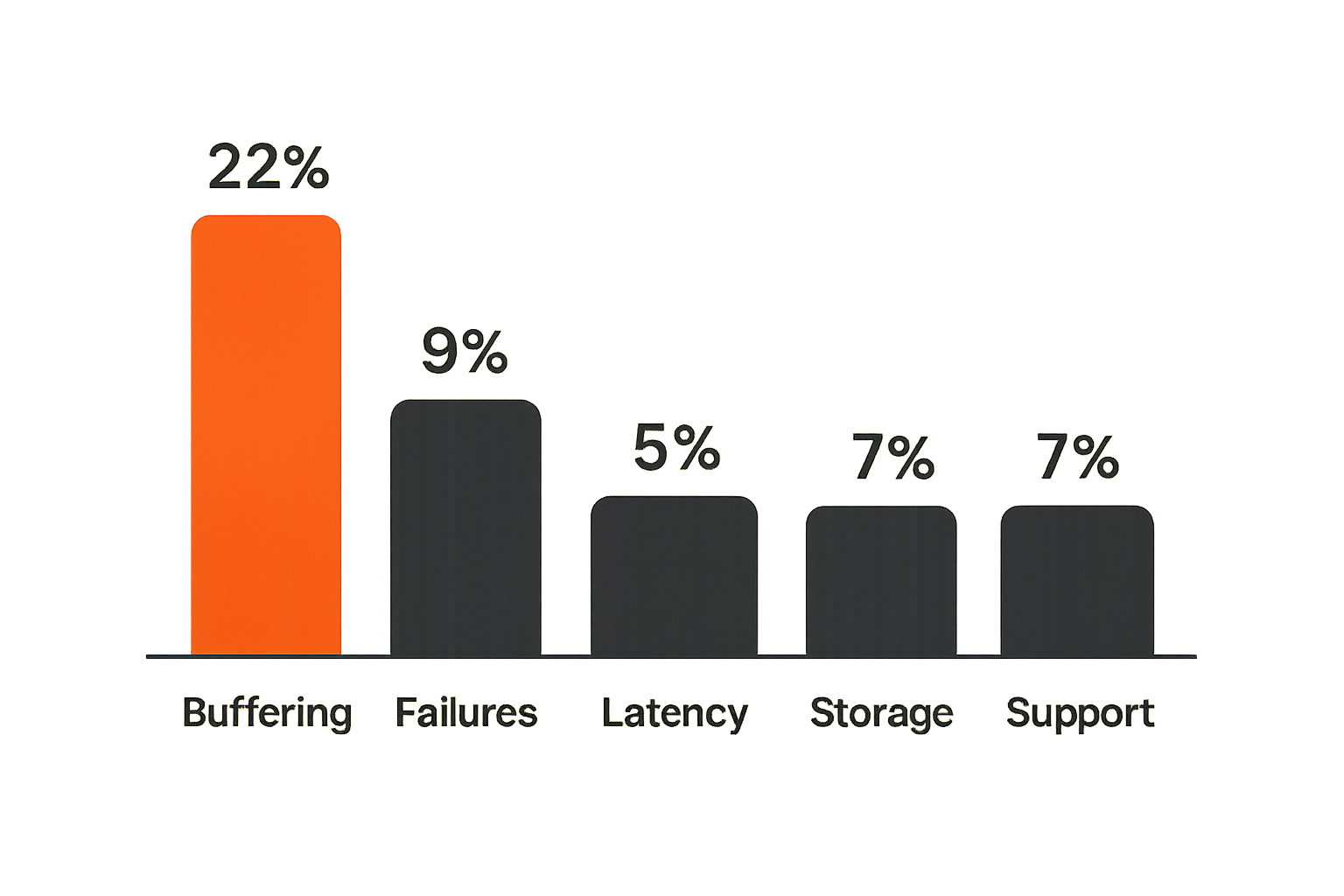
Arguments about best apps usually hide missing measurements. One person blames the IPTV provider. Another blames Wi-Fi. Someone else blames the media server. Without basic metrics, everybody is guessing.
Track a small set of signals:
- Playback start time by device type
- Buffering events by source and time of day
- Transcode count and CPU load
- Failed imports by source class
- IPTV playlist refresh failures
- Disk free space and growth rate
- Duplicate media count
- Support complaints from household users
Do not overbuild this. A dashboard, a weekly log review, or even a simple notes file is enough at first. The goal is to identify recurring failure classes.
A useful threshold table:
| Signal | Healthy pattern | Warning pattern | Action |
|---|---|---|---|
| Free disk space | More than planned reserve | Below reserve twice in a week | Pause ingest and prune |
| Transcodes | Rare or expected | Multiple during peak viewing | Add direct-play formats or hardware acceleration |
| Playlist refresh | Predictable success | Frequent missing groups | Validate provider and refresh logic |
| Failed imports | Occasional | Same source repeatedly fails | Quarantine source and review |
| Buffering | Isolated | Same room or device repeats | Test network path and codec support |
A simple weekly review loop
The weekly review should take ten minutes. If it takes an hour, the system is too noisy.
Use this sequence:
- Check free disk space and growth trend
- Review failed imports and quarantined files
- Check IPTV playlist refresh and EPG status
- Look at buffering or playback errors by device
- Remove duplicates and stale temporary files
- Rotate credentials or tokens when needed
- Write down one improvement for the next week
The review loop is where applied industrial technologies pay off. You catch drift before it becomes downtime. You make small corrections instead of emergency rebuilds.
Implementation blueprint for a resilient home media stack
Reference architecture
A practical 2026 home media architecture does not need to be expensive. It needs clear boundaries.
One workable model:
- Router with separate main, guest, and device networks
- NAS or small server as the stateful core
- Torrent client limited to legal and approved sources
- IPTV player or service path separated from file libraries
- Media server for personal and locally stored media
- Backup target for personal media only
- Monitoring or alerts for disk, CPU, and failed jobs
- Password manager for accounts and provider credentials
- Playback clients treated as replaceable front ends
The server or NAS is the control plane. Streaming sticks, smart TVs, tablets, and phones are clients. They should not be the only place where important playlists, libraries, or credentials live.
If you already use wake-on-LAN, scheduled jobs, and low-power devices, the same operating model applies. A prior guide on wake tech for torrent IPTV and home media architecture goes deeper on waking systems only when they are needed.
Step by step rollout
Do not rebuild everything in one weekend. That is how people create fragile systems with no rollback.
Use a staged rollout:
- Inventory sources, devices, accounts, and storage locations
- Classify sources by rights, trust level, and workflow type
- Create separate folders for inbox, validation, final libraries, and quarantine
- Move one source class at a time into the new workflow
- Add basic validation rules before final import
- Set disk reserve and cleanup policies
- Separate viewer accounts from admin accounts
- Add simple monitoring for playback, storage, and failed imports
- Document the recovery steps for common failures
- Review the setup weekly for the first month
The practical question is not whether this is perfect. It is whether the next failure has a known place to land.
Where bittorrented.com fits into this workflow
Use discovery without losing control
Discovery is useful. Blind ingestion is not.
A site can help you find media paths, live channels, search surfaces, and current options, but it should not replace your local judgment about rights, safety, privacy, and storage. The operator still decides what belongs in the workflow.
For torrent-adjacent discovery, that means understanding what a source is before you fetch anything. For IPTV, it means checking legitimacy before adding playlists. For streaming, it means knowing when the official app is the right boundary.
This is the sane middle ground for cord cutters and media hobbyists. Use tools to reduce friction, but keep the control plane explicit.
Product fit and practical boundaries
bittorrented.com is useful when you treat it as part of discovery and navigation, not as a magic replacement for architecture. The site is built for readers who want practical, up-to-date guidance on streaming services, torrents, IPTV, and home media tools.
That fits the workflow model because the hard part is not finding one more app. The hard part is knowing how each source should enter the stack, where it should be validated, how it should be played, and what should happen when it breaks.
Use bittorrented.com to stay oriented, compare options, and understand the moving parts. Then apply local rules: legal sources, safe handling, privacy-aware accounts, controlled storage, and measured playback quality.
Closing checklist for applied industrial technologies in home media
What to do next
Applied industrial technologies for home media is not about making your living room feel like a plant floor. It is about borrowing the useful parts: controlled inputs, clear ownership, validation, observability, maintenance, and recovery.
Start with this checklist:
- Separate legal torrents, licensed IPTV, paid streaming, and personal media
- Keep temporary intake away from final libraries
- Validate files and playlists before exposing them to viewers
- Treat playback devices as clients, not the source of truth
- Set storage reserves and cleanup rules
- Separate admin, viewer, guest, and device access
- Track buffering, failed imports, playlist refreshes, and disk trends
- Review the system weekly until failures become predictable
The mistake teams make is waiting until the stack is painful before adding structure. Add the structure while the system is still understandable.
Applied industrial technologies is the right mental model because it turns home media from a pile of apps into an operating workflow. That is the difference between a setup that works once and a setup people can rely on.
Try bittorrentedcom
bittorrented.com provides practical, up-to-date guidance on streaming services, torrents, IPTV, and home media tools. Try bittorrented.com.