
Streaming community ita looks simple until you actually depend on it. One person wants Italian audio. Another needs subtitles that match the release. Someone else wants live TV on a smart TV, a tablet, and a home media box without clicking through sketchy mirrors.
Teams think the problem is finding more links. The real problem is building a workflow that can separate useful sources from risky noise, keep playback predictable, and avoid turning a hobby media setup into a support queue.
That changes the conversation. A streaming community ita setup in 2026 is not just a forum, a Telegram group, an IPTV playlist, or a torrent index. It is an operating model: source discovery, legal boundaries, metadata quality, device compatibility, privacy, moderation, and recovery when something breaks.
The practical question is not which community is best. The practical question is how you evaluate, organize, and use Italian streaming communities without compromising safety, legality, or reliability.
Table of contents
- Why streaming community ita is an operations problem
- What people mean by streaming community ita
- Legal and trust boundaries come first
- The reference architecture for a safer streaming community ita workflow
- Discovery and indexing without drowning in noise
- Playback, subtitles, and Italian metadata
- IPTV, torrents, and live community habits
- Privacy, safety, and device hygiene
- Common failure modes in streaming community ita setups
- What works, what fails, and where bittorrented.com fits
- Closing checklist for streaming community ita in 2026
Why streaming community ita is an operations problem
The mistake teams make is treating a streaming community ita search as a one-time discovery task. Find the right forum, group, playlist, or index, and the problem is solved. In production, that is where the problems start.
Communities change. Sources disappear. Subtitles drift. IPTV playlists become stale. Mirrors inject ads. Devices handle codecs differently. A browser link that works on a laptop can fail on Android TV. A file that plays locally can be unusable for someone who needs Italian subtitles or clean audio tracks.
The link hunt is the wrong starting point
A link-first workflow rewards speed over quality. You click what is available, then debug later. That creates three predictable problems:
- You cannot tell whether a bad experience came from the source, the player, the network, the device, or the metadata.
- You build no memory. Every search starts from scratch.
- You normalize risky behavior, especially around pop-ups, unknown downloads, and copied playlists.
A useful way to think about it is to separate discovery from consumption. Discovery is where you evaluate options. Consumption is where you watch, listen, or archive through a controlled path.
Practical rule: never let discovery tools become your playback environment. The place where you find something should not automatically be the place where you trust it.
The real unit is the playback workflow
The real unit is not the link. It is the full playback workflow:
- User intent: film, series, channel, replay, documentary, sports, radio, or archive.
- Rights and access: legal service, public domain source, licensed IPTV, personal media, or other authorized source.
- Metadata: title, year, season, episode, language, subtitles, edition, codec.
- Delivery: stream, torrent, local file, IPTV playlist, or media server.
- Playback: device, app, bandwidth, subtitle rendering, audio track selection.
- Support: what to do when it fails.
Once you model the workflow, the community becomes one input among several. That is healthier than outsourcing your entire media stack to a chat thread.
What people mean by streaming community ita
Streaming community ita usually refers to Italian-language communities around streaming, IPTV, torrents, subtitles, media servers, and cord-cutting. Some are legal hobby groups. Some discuss public sources, open IPTV lists, or home media tooling. Others drift into unauthorized sharing. Those are not the same thing, and treating them as the same creates risk.
The practical question is: what job is the community doing for you?
Community is broader than one website
A streaming community ita environment can include:
- Forums discussing device setup, apps, codecs, and troubleshooting.
- Subtitle communities tracking Italian translations and sync notes.
- IPTV groups sharing playlist formatting advice and legal channel lists.
- Torrent communities discussing open, public domain, Linux ISO, archive, or creator-approved distribution.
- Home media groups focused on Jellyfin, Plex, Kodi, DLNA, NAS storage, and remote access.
- News pages tracking service changes, app updates, takedowns, and regional availability.
The best communities do not just post sources. They explain why something works, what assumptions it depends on, and what changed when it stops working.
Related reading from our network: Community Operations Audit: A Practical Workflow for Local Networks That Actually Work is not about streaming, but the ownership lesson applies: communities fail when nobody owns verification, follow-up, or cleanup.
Italian content adds metadata pressure
Italian media workflows are especially sensitive to metadata. A title may have an Italian release name, an original title, a dubbed edition, a subtitled edition, and different season numbering depending on the database.
That creates mismatches:
- S01E01 in one database becomes episode 0 or a special elsewhere.
- Italian subtitles are synced to a PAL, Blu-ray, web, or broadcast release.
- Audio labels say ita but actually contain commentary or mixed-language tracks.
- IPTV channel names change from Rai 1 to RAI1 HD to Rai Uno depending on the list.
Metadata is not cosmetic. It determines whether search, automation, subtitles, and playback work.
Legal and trust boundaries come first
A practical streaming community ita workflow starts with a boring but important boundary: only use sources you have the right to access. That includes licensed streaming services, free ad-supported platforms, public broadcasters, public domain archives, creator-approved releases, your own purchased media, and legal IPTV subscriptions.
This is not moral decoration. It is operational risk management. Unauthorized sources are more likely to disappear, mislabel content, expose users to malware, and create support problems you cannot fix.
Separate public information from unauthorized access
There is a difference between discussing how media technology works and helping people bypass rights. A healthy community can talk about codecs, open-source players, playlist formats, accessibility, subtitles, and home networking without distributing infringing content.
A practical boundary looks like this:
| Area | Safer community behavior | Risky behavior |
|---|---|---|
| IPTV | Discussing M3U format, EPG setup, legal channels | Selling suspicious premium playlists |
| Torrents | Sharing public domain or authorized torrents | Posting copyrighted releases without rights |
| Subtitles | Explaining sync, encoding, accessibility | Bundling with unauthorized media packs |
| Devices | Troubleshooting apps and playback | Pushing sideloaded apps from unknown sources |
| Privacy | Reducing tracking and securing devices | Promising anonymity for illegal access |
Practical rule: if a community cannot explain the legal basis for a source, treat the source as operationally unsafe even before you evaluate quality.
Treat unknown files and playlists as untrusted input
A playlist is data. A torrent file is data. A subtitle file is data. A media file is data. Treat all of them as untrusted until they pass basic checks.
That means:
- Do not install unknown codecs or players just because a page says so.
- Do not run scripts from media communities unless you can inspect them.
- Do not load random IPTV URLs into your primary account or family device.
- Do not assume subtitle files are harmless.
- Do not reuse personal passwords across media forums.
Related reading from our network: Apple Developer Program Architecture for Open AI Agent Standards in 2026 deals with a different ecosystem, but the trust model is similar: signing, credentials, and event boundaries matter when software touches personal devices.
The reference architecture for a safer streaming community ita workflow
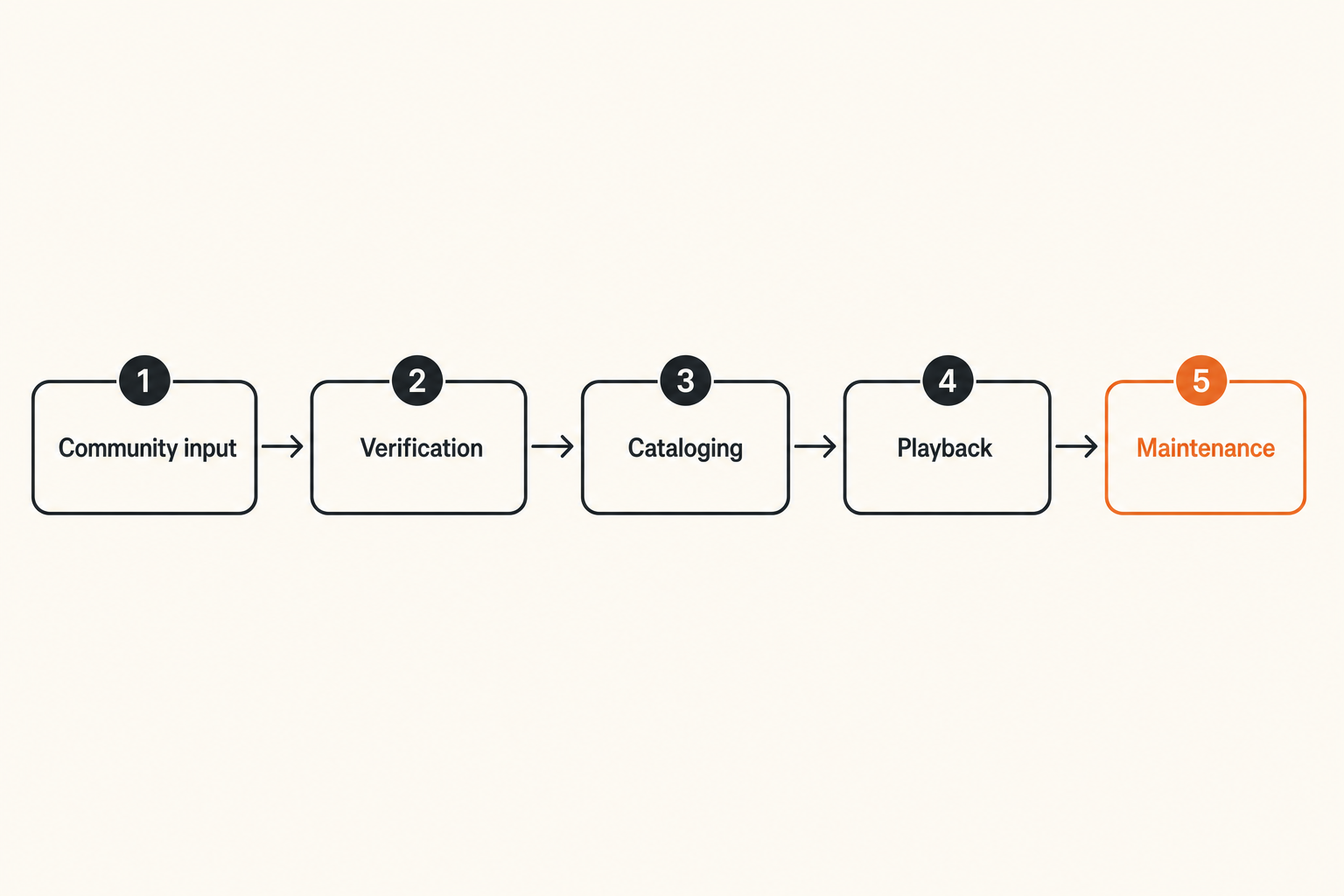
The architecture does not need to be enterprise-grade. It needs to be explicit enough that you know where risk enters and where decisions are made.
A simple model has five layers: community input, verification, cataloging, playback, and maintenance. Each layer has a different job. When you collapse them, you lose control.
Layer the workflow instead of mixing everything
Use this sequence when building a streaming community ita workflow for a home setup or small group:
- Collect sources from communities, official services, public broadcaster pages, legal IPTV lists, personal libraries, and open archives.
- Classify each source by rights status, type, language, device target, and trust level.
- Verify metadata before adding it to a library or playlist.
- Test playback on the actual devices used in the home.
- Store notes about what worked, what failed, and when it was last checked.
- Remove stale, unsafe, or legally unclear entries.
This sounds slower than clicking links. It is faster after the first few failures because you stop repeating the same debugging loop.
Practical rule: a source is not part of your workflow until it has an owner, a trust level, and a last-checked date.
Use ownership rules for sources and devices
Ownership does not mean bureaucracy. It means somebody knows what a thing is for.
For a solo hobbyist, that owner is you. For a household, it may be the person who maintains the media box. For a small community, it may be a moderator or playlist maintainer.
Define ownership for:
- Playlist sources.
- Subtitle providers.
- Torrent indexes used for authorized content.
- Media server libraries.
- Smart TV apps and sideloaded tools.
- Router, DNS, VPN, and firewall settings.
If nobody owns a source, nobody removes it when it becomes unsafe.
Discovery and indexing without drowning in noise
Discovery is where most streaming community ita setups get messy. People mix title search, release search, device troubleshooting, and legal status into one chaotic browser session.
Better discovery separates questions. Are you trying to find where something is legally available? Are you trying to identify the correct Italian metadata? Are you trying to locate a public domain file? Are you debugging why an IPTV channel fails?
Search by intent, not just title
Title-only search causes false positives. Add intent and constraints.
Examples:
- Italian audio film legal streaming availability.
- Rai channel EPG M3U legal playlist format.
- Public domain Italian cinema archive download.
- Italian subtitles sync web-dl 1080p.
- Kodi Italian metadata scraper season numbering.
For torrent-style discovery around authorized or public content, browsing distributed metadata can be useful, but it should not replace verification. If you use public indexing views such as DHT torrent browsing, treat the result as discovery data, not proof that a download is legal, safe, or high quality.
Keep source reputation separate from content preference
People often trust a source because it has the content they want. That is backwards. Source reputation and content preference are different dimensions.
Track them separately:
| Question | Good signal | Bad signal |
|---|---|---|
| Is it legal for me to access? | Official, licensed, public domain, creator-approved | Vague claims, hidden sellers, evasive answers |
| Is it technically reliable? | Stable URLs, clear formats, recent checks | Dead links, forced redirects, random mirrors |
| Is metadata clean? | Language tags, edition notes, EPG IDs | Generic names, missing years, wrong episodes |
| Is the community trustworthy? | Moderation, corrections, safety warnings | Spam, pressure tactics, secret installers |
Related reading from our network: Peptide Payments in 2026: Crypto Checkout Architecture for High-Risk Merchants is about payments, but the same operational split applies: trust, reconciliation, and state matter more than the surface UI.
Playback, subtitles, and Italian metadata
Playback is where messy metadata becomes visible. The source looked fine. The file name looked fine. Then the audio track is wrong, subtitles are out of sync, or the TV cannot decode the stream.
The mistake teams make is blaming the player first. Sometimes the player is the problem. More often, the workflow failed earlier.
Language tags are not optional
For Italian media, language tags should be explicit:
- Audio: ita, eng, original, commentary, forced.
- Subtitles: ita full, ita forced, ita SDH, eng, none.
- Region: Italy, EU, international, local broadcaster.
- Edition: theatrical, director cut, TV cut, remaster, web, Blu-ray.
If you maintain a home library, normalize names before importing. If you consume IPTV, normalize channel names and EPG mapping. If you use a streaming app, check whether it exposes audio and subtitle selection before committing to it.
A small naming habit prevents many failures:
Title (Year) - ITA audio - ITA forced subs - 1080p - source note
That is not pretty, but it is debuggable.
Subtitles fail when timing and edition drift
Italian subtitles fail for predictable reasons:
- Different intro length.
- Recap included in one edition but not another.
- PAL speed-up on older releases.
- Ad breaks in broadcast captures.
- Director cut scenes missing from standard subtitle files.
- Forced subtitles mixed with full subtitles.
Do not fix subtitle drift by downloading ten random files and hoping. Note the edition, runtime, frame rate, and source family. Then sync or select subtitles based on that information.
IPTV, torrents, and live community habits
A streaming community ita audience often overlaps with IPTV viewers and torrent users. That does not mean every use case is the same. IPTV is stateful and live. Torrents are distributed and availability-driven. Streaming services are account and region driven. Home media is storage and metadata driven.
The practical workflow respects those differences.
IPTV needs playlist hygiene
IPTV failures are often playlist failures. A channel may be legal and free, but the playlist entry can still be stale, mislabeled, or missing EPG data.
Good playlist hygiene includes:
- Clear source notes.
- Legal status notes.
- EPG ID mapping.
- Channel logo sanity checks.
- Grouping by region and category.
- Dead channel cleanup.
- Backup playlists for known-good sources.
If your main use case is live channels, a dedicated interface for streaming live TV from IPTV playlists is more useful than a pile of copied M3U files in a notes app.
Torrents need verification and patience
Torrent workflows are not magic streaming workflows. They depend on availability, peers, file structure, client behavior, and your legal right to obtain the content.
For authorized torrent use, verify:
- The publisher or source.
- Hash consistency.
- File list before download.
- Media format before playback.
- Seeding expectations.
- Storage location.
What breaks in practice is impatience. Users start playback before enough data is available, then blame the client or community. Or they download a badly labeled file and discover too late that it is the wrong language, wrong episode, or wrong format.
Practical rule: torrents are excellent for resilient distribution when rights and metadata are clear. They are terrible as a substitute for verification.
Privacy, safety, and device hygiene
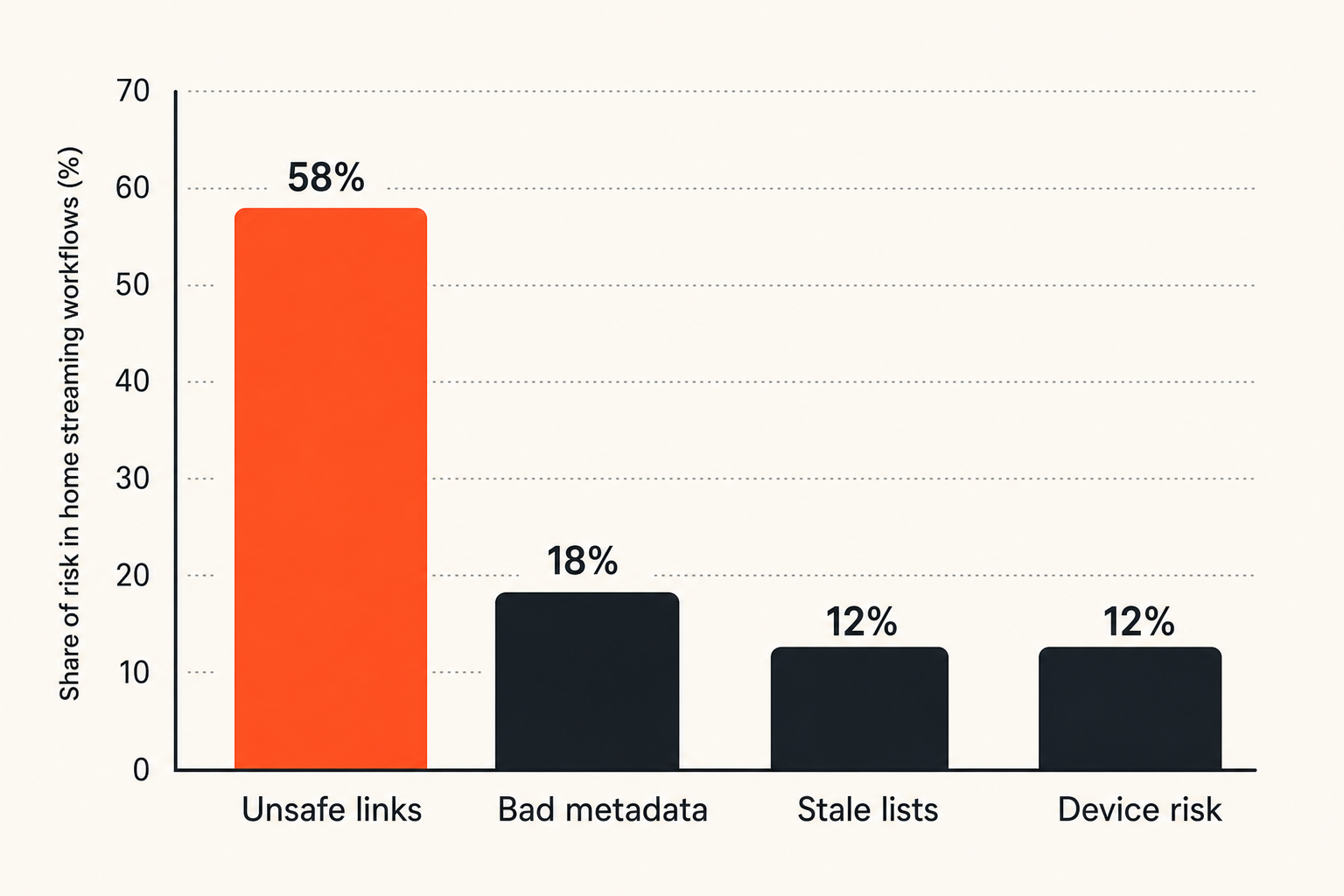
Privacy is not a sticker you add at the end. It affects how you browse communities, test links, store files, and let devices talk to each other.
A streaming community ita workflow touches browsers, phones, TVs, routers, DNS, media servers, accounts, and sometimes payment information. That is enough surface area to be careful.
Do not browse like everything is harmless
Use basic isolation:
- Keep a separate browser profile for media discovery.
- Disable unnecessary extensions in that profile.
- Avoid logging into personal accounts while testing unknown sites.
- Use ad and tracker controls where legal and appropriate.
- Avoid notification permissions from unknown sites.
- Never install a required player from a random mirror.
Also be skeptical of urgency. Pages that claim you must update a codec, unlock a stream, verify age through a strange form, or install a special VPN are often trying to move you out of a safe workflow.
Segment risky workflows from daily devices
A good home media setup does not put every experiment on the family TV.
Use layers:
- Test unknown links on a low-privilege device or sandboxed browser.
- Keep your NAS or media server behind normal access controls.
- Do not expose admin panels to the public internet without strong reasons.
- Use separate user accounts for guests and family playback.
- Keep router, TV box, and media server firmware updated.
- Remove apps you no longer use.
If you experiment with wake-on-LAN, dashboards, or remote media automation, the operational patterns in Wake Tech for Torrent, IPTV, and Home Media are relevant because remote convenience creates new failure paths when devices wake, sync, or expose services unexpectedly.
Common failure modes in streaming community ita setups
A bad setup does not usually fail all at once. It slowly becomes annoying. Search takes longer. Playback gets less predictable. Users stop trusting the library. Then the maintainer starts rebuilding everything from scratch.
That is avoidable if you know the common failure modes.
What breaks in practice
The most common failures are operational, not exotic:
| Failure mode | Symptom | Likely cause | Fix |
|---|---|---|---|
| Wrong language | English audio instead of Italian | Missing audio tags | Normalize file and stream metadata |
| Subtitle drift | Subs start fine then fall behind | Edition mismatch | Match runtime and release type |
| Dead IPTV channel | Channel disappears | Stale playlist | Track last checked and source |
| Bad smart TV playback | Works on laptop, fails on TV | Codec or container issue | Test target device before relying on it |
| Unsafe redirects | Pop-ups and fake buttons | Low-trust source | Remove source from workflow |
| Duplicate library items | Same film appears multiple times | Inconsistent naming | Apply naming rules before import |
The pattern is simple: if you cannot identify the layer, you cannot fix the failure. You guess. Guessing is expensive.
A simple incident workflow
When playback fails, do not randomly change five things. Use a short incident workflow:
- Reproduce the issue on the original device.
- Test the same source on a known-good device.
- Check whether the failure is source, network, player, metadata, or account related.
- Review last-known-good notes.
- Remove or quarantine unsafe sources.
- Update the community note or local documentation.
- Retest before declaring it fixed.
This is not overkill. It is how you avoid the classic loop where one person changes DNS, another changes the player, and nobody knows what solved the issue.
What works, what fails, and where bittorrented.com fits
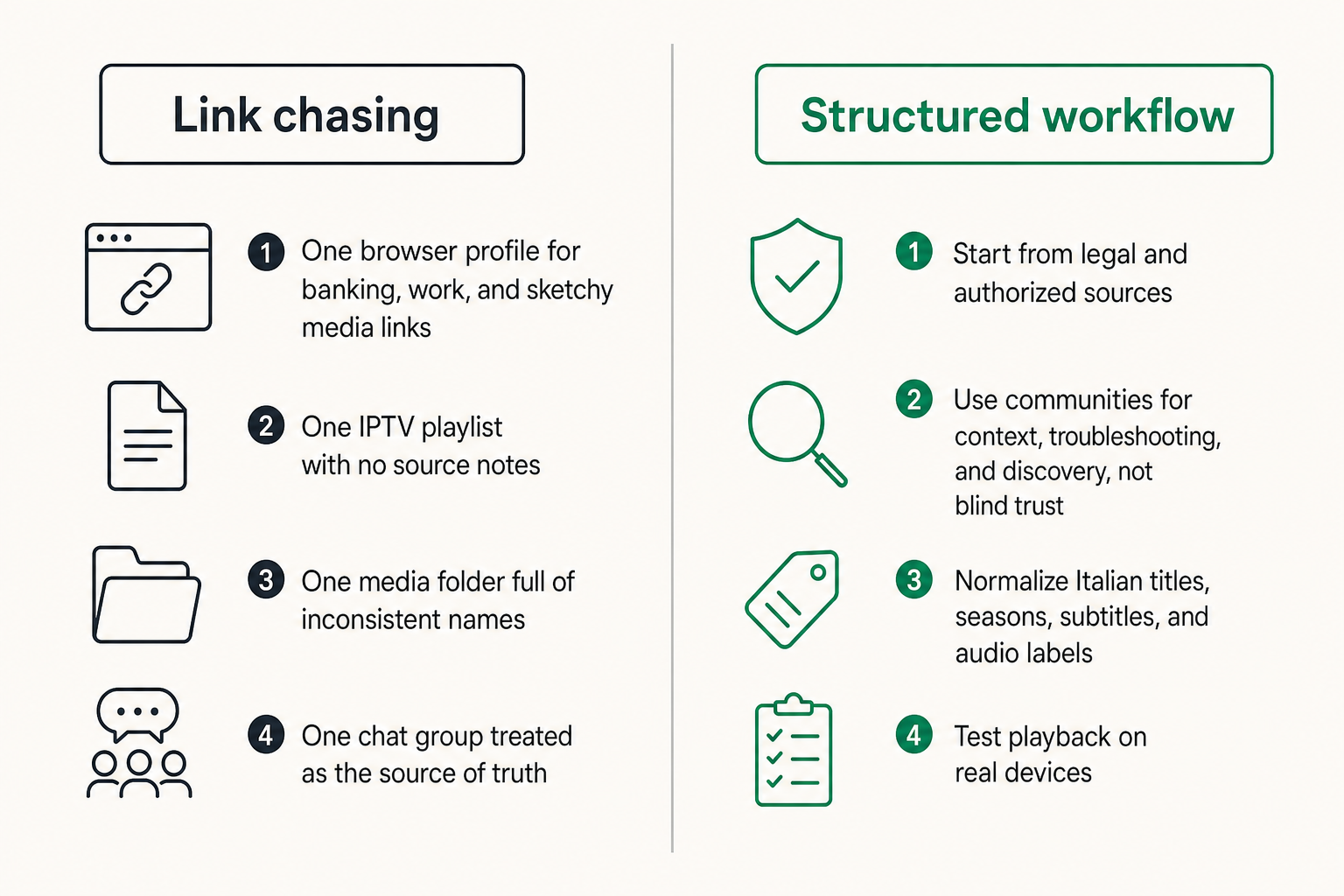
A streaming community ita workflow works when it respects the boring parts: legal access, source trust, metadata, playback testing, and maintenance. It fails when the community is treated as an unlimited shortcut.
What works
What works is structured, repeatable behavior:
- Start from legal and authorized sources.
- Use communities for context, troubleshooting, and discovery, not blind trust.
- Normalize Italian titles, seasons, subtitles, and audio labels.
- Keep IPTV playlists clean and documented.
- Test playback on real devices.
- Track what changed.
- Remove stale or suspicious sources quickly.
A useful way to think about it is signal versus noise. Good communities increase signal: they explain formats, compatibility, metadata, rights, and maintenance. Bad communities increase noise: they flood users with mirrors, ads, vague claims, and risky downloads.
What fails
What fails is the everything bucket:
- One browser profile for banking, work, and sketchy media links.
- One IPTV playlist with no source notes.
- One media folder full of inconsistent names.
- One chat group treated as the source of truth.
- One smart TV used for every experiment.
- One person responsible for fixes, but no notes.
The failure is not that users are careless. The failure is that the workflow gives them no safe default.
Where bittorrented.com fits
bittorrented.com is useful when you want a practical media-tech lens instead of hype. The goal is not to pretend torrents, IPTV, streaming services, and home media tools are all the same. They are different workflows with different risks.
For a streaming community ita reader, that means using the site as a place to think through architecture: how discovery connects to playback, how IPTV playlists should be handled, how torrent metadata should be treated, and how home media devices should be operated without turning convenience into chaos.
The product fit is strongest for readers who want one place to reason about legal, safe, privacy-aware media workflows rather than chasing fragmented advice across random threads.
Closing checklist for streaming community ita in 2026
Streaming community ita is useful when you treat it as an input to a controlled workflow. It is risky when you treat it as the workflow itself.
The operator mindset is simple: reduce unknowns before playback. Know the source. Know the rights. Know the metadata. Know the device. Know how to roll back.
The operator checklist
Before you rely on a community, playlist, index, or source, check:
- Is the access legal and authorized for your situation?
- Is the source identity clear?
- Are Italian audio and subtitle details explicit?
- Is the playlist or file recently verified?
- Does it work on the actual playback device?
- Can you remove it cleanly if it becomes unsafe?
- Are personal accounts and daily devices isolated from testing?
- Is there a note explaining why this source is trusted?
The final decision rule
The final decision rule is blunt: if a streaming community ita source cannot survive basic questions about legality, trust, metadata, and playback, do not build your media workflow around it.
That does not make the community useless. It makes the community safer. Good communities help users make better decisions. Bad workflows make every decision feel urgent.
Try bittorrented.com
bittorrented.com gives practical, up-to-date guidance on streaming services, torrents, IPTV, and home media tools. Try bittorrented.com